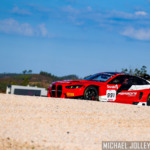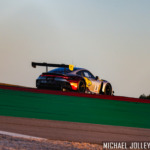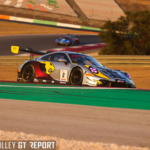
In the summer of 2025, Michael Jolley set out on the ultimate endurance racing journey: attending the 24 Hours of Le Mans, Nürburgring, and Spa on three consecutive weekends. 72 Hours of June is his story, told in three parts.
Part I begins in France, at the legendary Circuit de la Sarthe.
72 HOURS OF JUNE: LE MANS | NÜRBURGRING | SPA
It was mid-2024, whilst watching the 24 Hours of Spa, when a comment got my brain going: all three of Europe’s monster 24-hour races would be held in consecutive weeks. And with that, the idea of attending the entire 72 hours of June was born.
After months of meticulously studying train schedules, booking hotels, campsites, and race tickets, it was suddenly time to set off and spend the next three weeks with just me, my camera, and a passion for all things fast. Now, why would I take on such an intense schedule? The short answer: I’m addicted to racecars. The long answer: this was the first time these three behemoths had been held on three consecutive weeks—an opportunity that was simply impossible to pass up.
The first week of this extraordinary trip took me to the French city of Le Mans. For 50 weeks of the year, it’s a regular city, but for two weeks it transforms into a City of Speed. The 13-kilometre track closes public roads and brings in over 300,000 spectators. I arrived on Tuesday, just after testing and just before free practice. Having arrived late, I headed to bed, ready for an early start.
Wednesday was exceptionally special—waking up and heading straight to the track via the convenient shuttle buses organised by the ACO. I went straight to the stadium section of the circuit to get my first glimpse of this famous race. “Blown away” would be an understatement. As various cars fired up and conversations fell silent, the rumble of engines quickly engulfed the area. The more engines that came to life, the more intense the sound became.
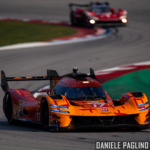
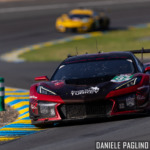
In all my years of attending series such as British GT, nothing could prepare me for the sheer volume that WEC’s Hypercars and LMGT3s brought to the table. I won’t lie—the next two days were spent in awe of these incredible machines, particularly the Aston Martin GT3s, each sounding as angry as the next. Although I’m specifically writing about the GT classes of these races, I can’t resist mentioning the absolute monsters that make up the Hypercar class—particularly the Aston Martin Valkyrie and Cadillac V-Series.R. Harbouring V12 and V8 engines respectively, these two beasts definitely caught the attention of my eardrums.

Friday was a rest day for the tyres but not for my feet, as I attempted to complete an entire track walk—not my smartest move in 35-degree heat. Being able to walk these famous corners was definitely my favourite part of Friday, and the parade of old cars down at Mulsanne was also a highlight. Track walk completed, it was off to bed—an early night to prepare for the 30-hour day ahead.
Saturday morning, I awoke to the sound of Mustangs roaring down the Mulsanne Straight—who needs an alarm clock when you’re camping next to a race track? I climbed out of my tent and headed into the circuit for the big day. The atmosphere was electric, a sea of people all geared up for the biggest sportscar race of the year. At 3:45pm, after an incredible display by the French Air Force, the cars set off for their formation lap. Five minutes later, the green flag dropped and the drivers of all 62 cars were foot to the floor as they roared through the Dunlop Curves. The clock had started, and no one knew what curveballs the next 24 hours would throw at us.
A couple of hours into the race, I decided to take the bus down to Arnage. Luckily for me, I bumped into the Select Motor Racing team, who I had booked with for my expedition to the Nürburgring the following week, and was kindly offered an excursion to the famous corner—rather than stand in the almost two-hour queue for the ACO-provided buses.

Arriving at Arnage and Indianapolis was quite the experience. It’s the closest you can get to the cars on the entire circuit, with just a fence and a couple of feet of tarmac separating the cars and spectators—no gravel traps, no run-off areas, just one single fence. The place is magical. Being this close, you can feel the air as the cars fly past, smell the rubber on the tyres heading into a heavy braking zone—the cars feel almost touchable. After an hour at Arnage, it was time to venture further down to the Mulsanne Corner. Possibly the most impressive corner on the circuit, cars decelerate from over 300kph all the way down to 70kph within seconds before blasting off again toward Indianapolis. This corner is a prime overtaking spot throughout the race.
Back up to the main circuit now, and after a bit of traffic, we arrived around 11:30pm. Spectators were leaving the circuit en masse, making the sensible decision to get a few hours’ kip. Not me, however—I had decided I had to experience the full 24 hours of all three races. The night was cold and quite uneventful by Le Mans standards, with not much more than the occasional yellow flag and a rather unfortunate incident for the #31 BMW involving the local wildlife. A rabbit, unfortunately, ran in front of the car and destroyed its radiator—devastating for me as a huge BMW fan. As I lay on the bank fighting the urge to doze off, I heard a screech and a bang, which turned out to be Cem Bölükbaşı sending his Nielsen Oreca into the barriers at Tertre Rouge. Definitely a wake-up call for me—and possibly a reminder to all the other drivers not to get complacent. This is a long race, and there were still 12 hours to go.

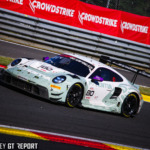
The next eight hours were a blur of attempts to stay awake as I wandered the track. The almost lifeless stands slowly began to fill up again as people returned from their slumber. Suddenly, before I knew it, 12pm had rolled around, and with only four hours left of the race, I picked a spot for the ending—right next to the finish line. The final four hours saw an intense battle rage between the Hypercars of Ferrari and Porsche for second and third place, while the lead Ferrari, driven by Robert Kubica, maintained a comfortable lead. Porsche would ultimately finish second, with Ferrari taking the overall win. It wasn’t all tears for Porsche, however, as the No.92 Manthey 911 GT3 R crossed the line first in class. Being able to witness the finish almost on top of the line was a feeling I’ll hold forever. The track invasion that followed for the podium is an experience that could only happen at the Circuit de la Sarthe—thousands gathering on the track at once, celebrating an incredible 24 hours.
The prestige of Le Mans is what draws so many to the event, and it does not disappoint. The buses made for effortless sightseeing, the echo of the cars through the stadium section caused ripples of excitement, and the sheer number of support races ensured not a minute of the day was wasted. It all truly makes for an event I cannot wait to attend again.