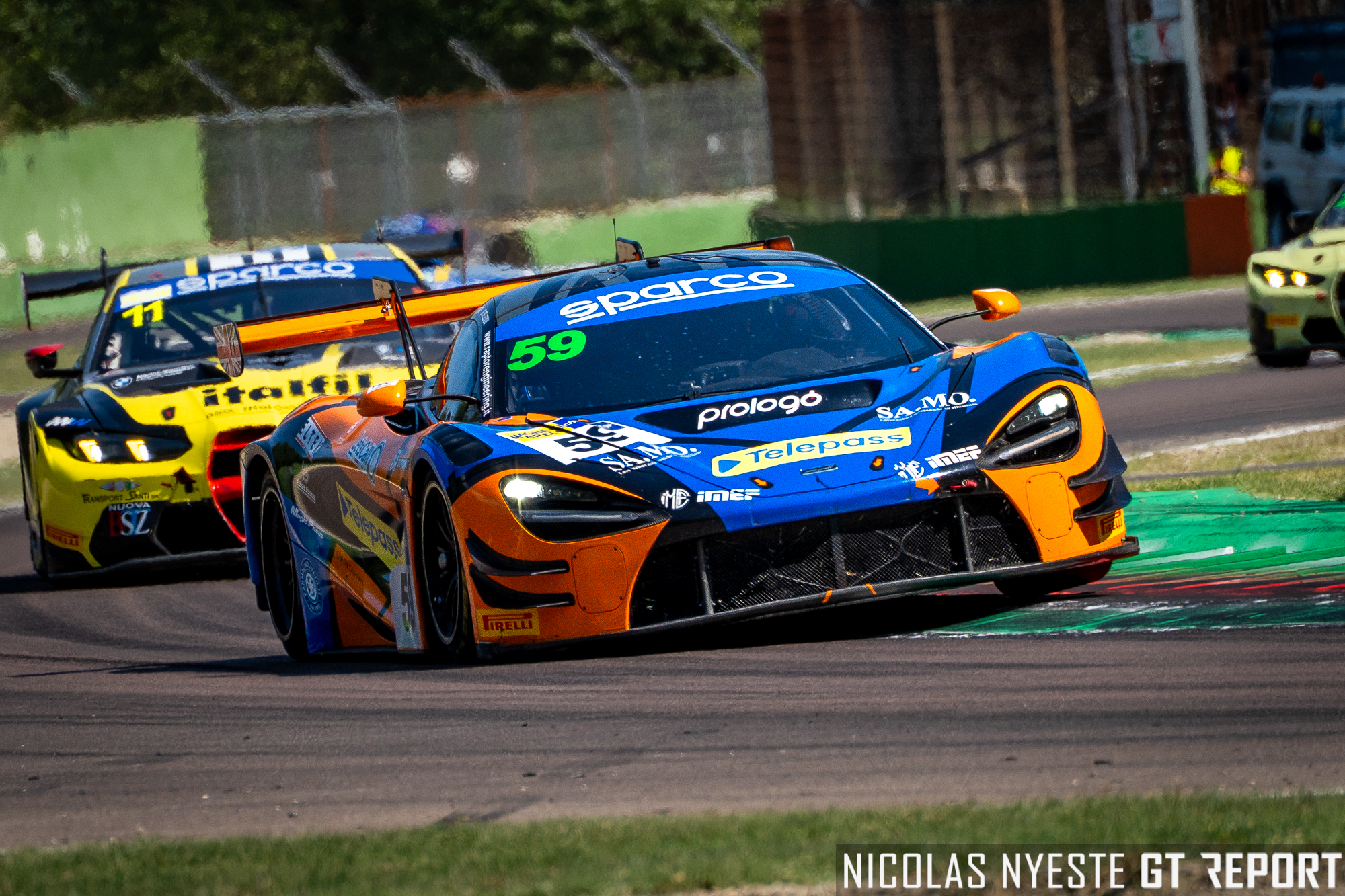
The Italian GT Championship (CIGT) has traditionally been familiar territory for Ferrari and Lamborghini, joined by nationally backed Audi and BMW programmes and, for years, Mercedes-AMG through Antonelli Motorsport. British machinery, by contrast, has been a much rarer sight on Italian grids. Raptor Engineering is now helping to change that. Under co-owner Andrea Palma, the Modena-based team has taken McLaren into Italian GT with a McLaren 720S GT3 in the Sprint championship and, true to Palma’s methodical approach to growth, is now taking its first steps into Endurance as well – pairing careful progression with a distinctly Italian passion for racing.
Palma’s route into team ownership came through the cockpit. An experienced GT racer in his own right, he has competed internationally while also building a long-standing relationship with Pagani Automobili as a factory test and development driver. That combination of driving experience, technical understanding and team management shapes the way Raptor Engineering approaches its expansion into GT3 racing.
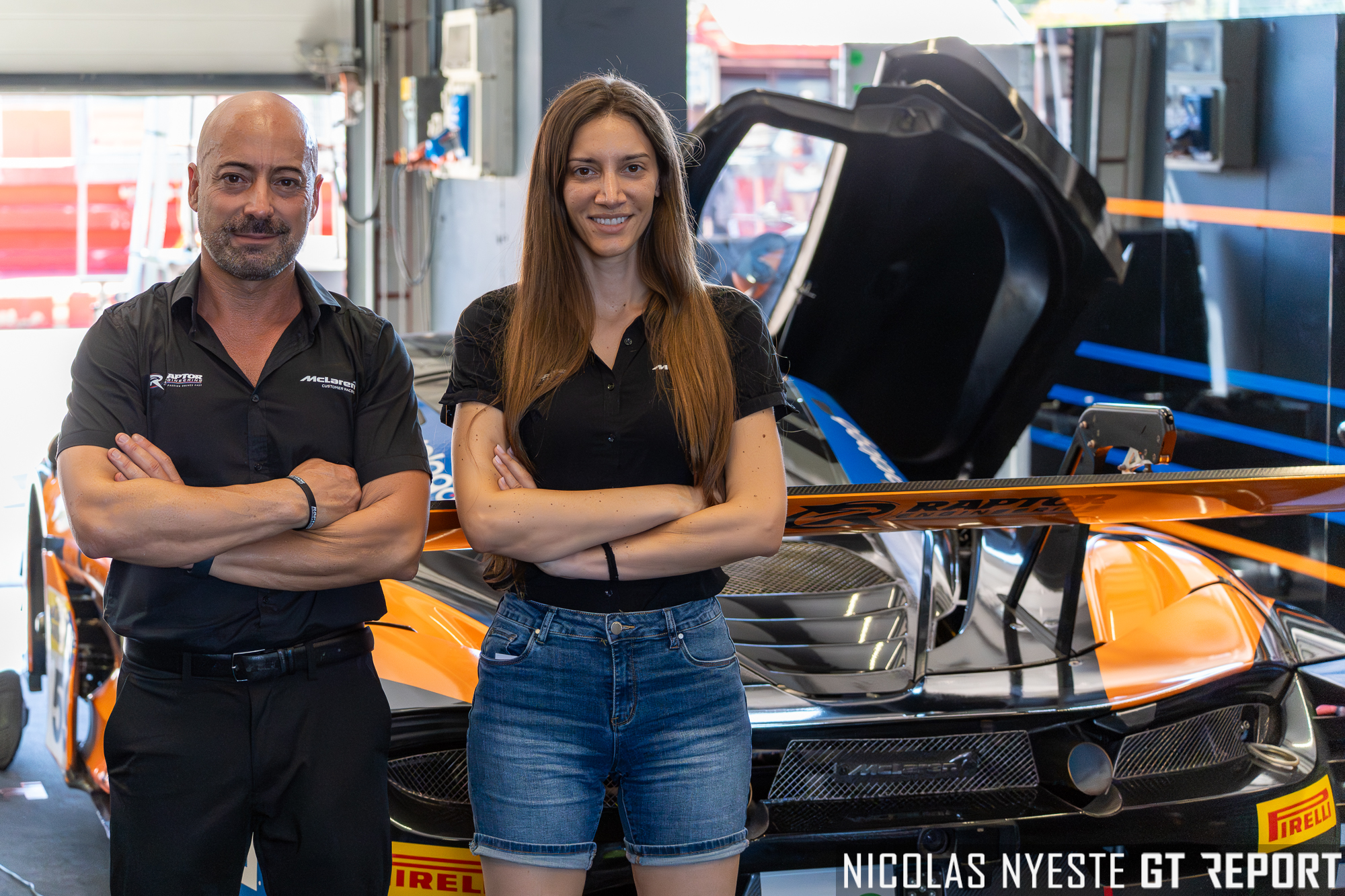
Alongside Andrea Palma, Raptor Engineering is led by co-owner Isabelle Maserati, the team’s CEO and Team Manager, who plays a central role in the day-to-day running and sporting direction of the operation
Raptor Engineering’s path into Italian GT
With Raptor Engineering now taking its biggest step yet into GT3 competition, the obvious place to start was with the decision behind it: why McLaren, and why Italian GT?
“It wasn’t really the Italian championship itself that pushed us towards McLaren,” Palma tells GT REPORT.
“I would say it was more a series of circumstances that came together from a project that started at the end of 2025.
“The original idea was to get closer to McLaren, to work alongside them and begin building a relationship through the McLaren Trophy. So, our first step was to enter the McLaren Trophy as a team.
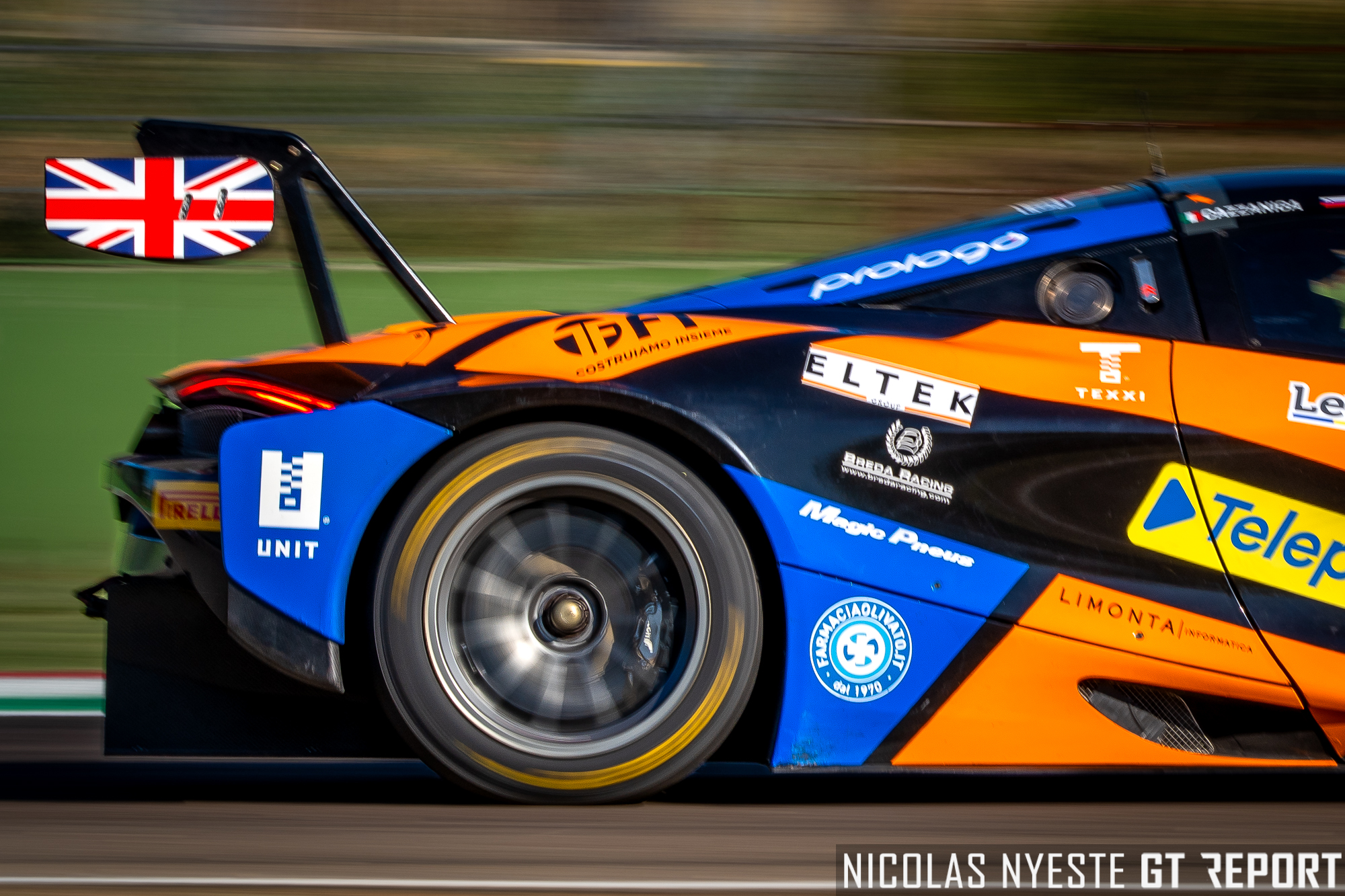
“At the same time, the idea of moving into GT3 came about. I’ve also been active in the Italian GT Championship for many years. It was one of the first championships I competed in, so there was already that connection there.
“We had also previously competed in both Sprint and Endurance with Porsche, so at that point it became quite natural to switch that programme over to the McLaren brand.”
Success did not take long to arrive. At Vallelunga, only the second weekend of the Sprint season, Riccardo Cazzaniga and Dean MacDonald converted pole position into victory in Race 1, giving Raptor its first GT3 win and McLaren its first victory in the Italian GT Sprint Championship.
Why McLaren appealed to Andrea Palma

For Palma, however, the relationship with McLaren extends well beyond the performance of the 720S GT3 itself.
“We’re getting on extremely well with McLaren, and that goes beyond the car itself. If we put the mechanical side of the car to one side for a moment, we’re also very happy with everything surrounding the company itself.
“McLaren is an incredibly important organisation. The people working within McLaren are very highly qualified, there is a very high level of motorsport thinking within the company, and a lot of it is also aimed at developing young drivers.
“It’s no coincidence that McLaren has created its own academy programme for young drivers. That is an extremely important project, both for young drivers and for the teams.
“And then there is also the emotional and technological side, which shouldn’t be overlooked. Personally, McLaren is a brand I’ve always liked. It has an incredible charm and still makes my eyes light up every time.
“Technically, I think it is also the only GT car with a carbon-fibre tub. So it has a bit of everything: technology, organisation and automotive culture. We know that the British have a very strong motorsport culture.”
Giorgio Sanna and McLaren’s renewed push into national GT racing

The growing relationship between Raptor and McLaren also comes at a time of significant change within the British manufacturer’s customer-racing programme.
At the end of 2025, Palma’s fellow Italian Giorgio Sanna joined McLaren Automotive as its new Head of Motorsport. Sanna brought with him considerable experience from Lamborghini, where he oversaw the Squadra Corse’s rise into a major force in GT3 racing through the Huracán GT3 programme.
Palma tells GT REPORT that Sanna’s arrival has been key to that change.
“Starting this year, at the beginning of the 2026 season, Giorgio Sanna joined McLaren as the new head of motorsport.
“And it is probably – actually, I can confirm it – thanks to him that McLaren is now achieving important results in areas where it previously didn’t have much of a presence.
“For example, that includes the Italian championship, both in GT Sprint and GT Endurance.
“He strongly believes in these national programmes and, obviously, has a very complete vision of what motorsport should be for an important manufacturer like McLaren.”
Raptor’s methodical step into GT3

While McLaren is expanding its presence, Raptor is taking a characteristically methodical approach to its own growth. The team began its GT3 programme in Sprint before adding selected Endurance races later in the season, a progression Palma says was very much intentional.
“For us, the Endurance race at Imola was a race we primarily wanted to do to gain experience with next year in mind.
“We started with Sprint because our way of doing things is always to take a step only when we feel we are ready for it as a team. We wanted to take a path that goes upwards, not one where you start at the top and work your way down
“So we began with Sprint, using the skills and experience we already had. We built the team and developed it according to what is required for Endurance racing, and now we have reached the point where we can start putting our feet into Endurance as well.
“We had already done it with Porsche in the Cup category, but for me the step from Cup to GT3 is quite significant. You need to arrive very well prepared and know what you are capable of.
“I don’t like entering something before the right moment. I prefer to be sure that, when we do something, we can do it properly and make a good impression.”
How Andrea Palma builds a GT3 team

In a sport defined by technology, engineering and increasingly sophisticated machinery, Palma keeps coming back to something much more fundamental: the people behind it.
“You start with the basic ingredients, which are the people.
“The car itself is an excellent car. It has already shown what it can do in other championships, and now also with us in Italian GT. It is a fantastic car and has everything required to perform well.
“But in 99 percent of cases, what makes the difference in the end is the team itself. You need to arrive prepared, with the right staff and the right people in the right positions.
“What we did was help the people we already had grow, while recruiting others with the right qualities for the programme.
“And that process might not be finished yet. We may recruit more people and continue evolving the organisation so that, in the future, we can compete in both Endurance and Sprint championships outside Italy as well.”
Cazzaniga, MacDonald and factory support

The same focus on people applies to the drivers. In Sprint, Raptor has paired Riccardo Cazzaniga with Dean MacDonald, while Cazzaniga stayed with the team for its first Endurance outings.
“We have Cazzaniga and MacDonald together in Italian GT Sprint. In Endurance, we only have Cazzaniga, who is a factory driver and was assigned to us by McLaren. For us, that is an honour, because having the manufacturer’s approval and having such an important figure as a factory driver within our team means a lot.
“Cazzaniga has all the qualities you want from a professional driver. He is very good. The line-up we put together for Sprint has been very successful and, above all, very reliable.
“For Endurance, we kept Cazzaniga because MacDonald also has several commitments with other teams and in McLaren championships internationally. The choice was always made together with McLaren.
“At Raptor, we are constantly in discussion with McLaren and we don’t make these decisions entirely on our own. There is an organisation and technical consultation behind everything we do, both with the drivers and the car.”
More than a customer team

That support goes beyond driver selection.
“There is technical support and spare-parts support, for example,” Palma explains to GT REPORT.
“Here at Imola, we have our Raptor GT3 and another McLaren from CSA Racing, so there are only two McLarens in the entire paddock.
“Despite that, McLaren as a manufacturer has sent its own technicians here and brought a truck with all the spare parts required for the GT3.
“So you can see that there is significant support from the manufacturer. They make sure we aren’t missing anything and that the team and the car always have everything necessary to do the job properly.”
‘We got slapped around’: How Raptor turned Imola lessons into success
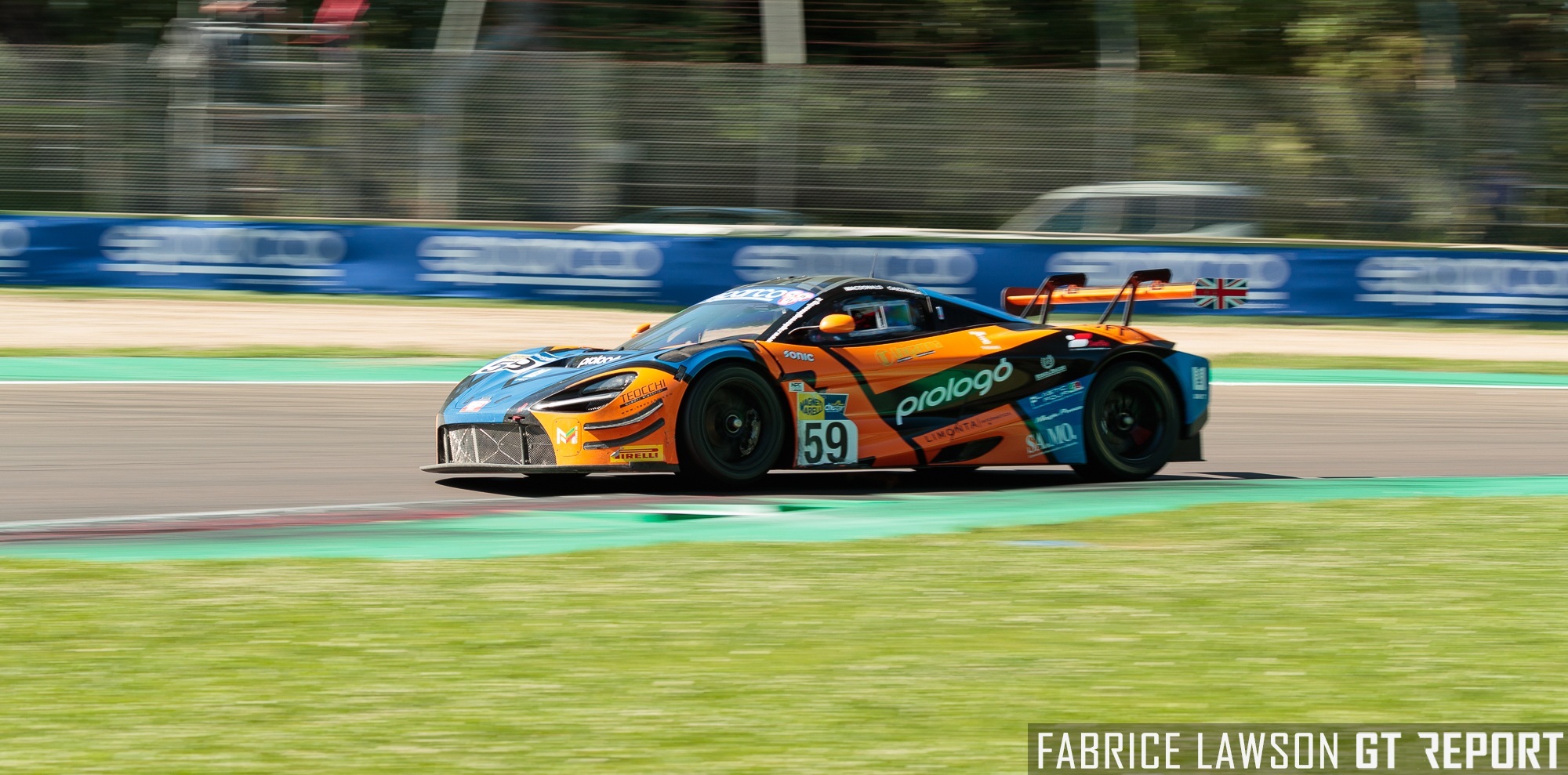
Despite how quickly the results followed, Palma does not see Raptor’s early success with McLaren as something that came immediately.
“At the first [Sprint] race at Imola, to put it bluntly, we got slapped around a little bit. But we expected that, because it was also a moment when we needed to understand where we were as people and as a team.
“We had to understand the car, understand where we could improve it and where we ourselves needed to improve.
“From there, we progressed step by step, obviously working closely with McLaren to understand where we could develop the car, the drivers and the team itself.
“I think that when all those elements come together and work well together, success follows naturally.”
From foundations to the future: Raptor’s plans for 2027

Raptor’s plans for 2027 are therefore less about making a sudden jump and more about continuing the same progression Palma has followed from the start: build the people, understand the car, then take the next step when the team is ready.
“We’re working on 2027 now and evaluating several different drivers and programmes.
“We will definitely compete in both Italian GT Sprint and Endurance in 2027.
“We will also continue with the McLaren Trophy programme. We believe the Trophy is an excellent training ground for developing young drivers coming from the junior categories.
“Through the Trophy, you can create a pathway and continuity for drivers who want to build a career and progress further into the GT world.”

It is an approach that seems to suit both sides of Raptor Engineering’s new partnership. Palma speaks admiringly of the British motorsport culture behind McLaren, but the way he has built his own team is equally rooted in the passion of Italy’s Terra dei Motori. With Raptor, Palma brings together the best of both worlds: the technology matters, the car matters, but only when the people around it are ready to make the most of both.
As Palma puts it: “Si parte dagli ingredienti base che sono le persone” – you start with the basic ingredients, which are the people.