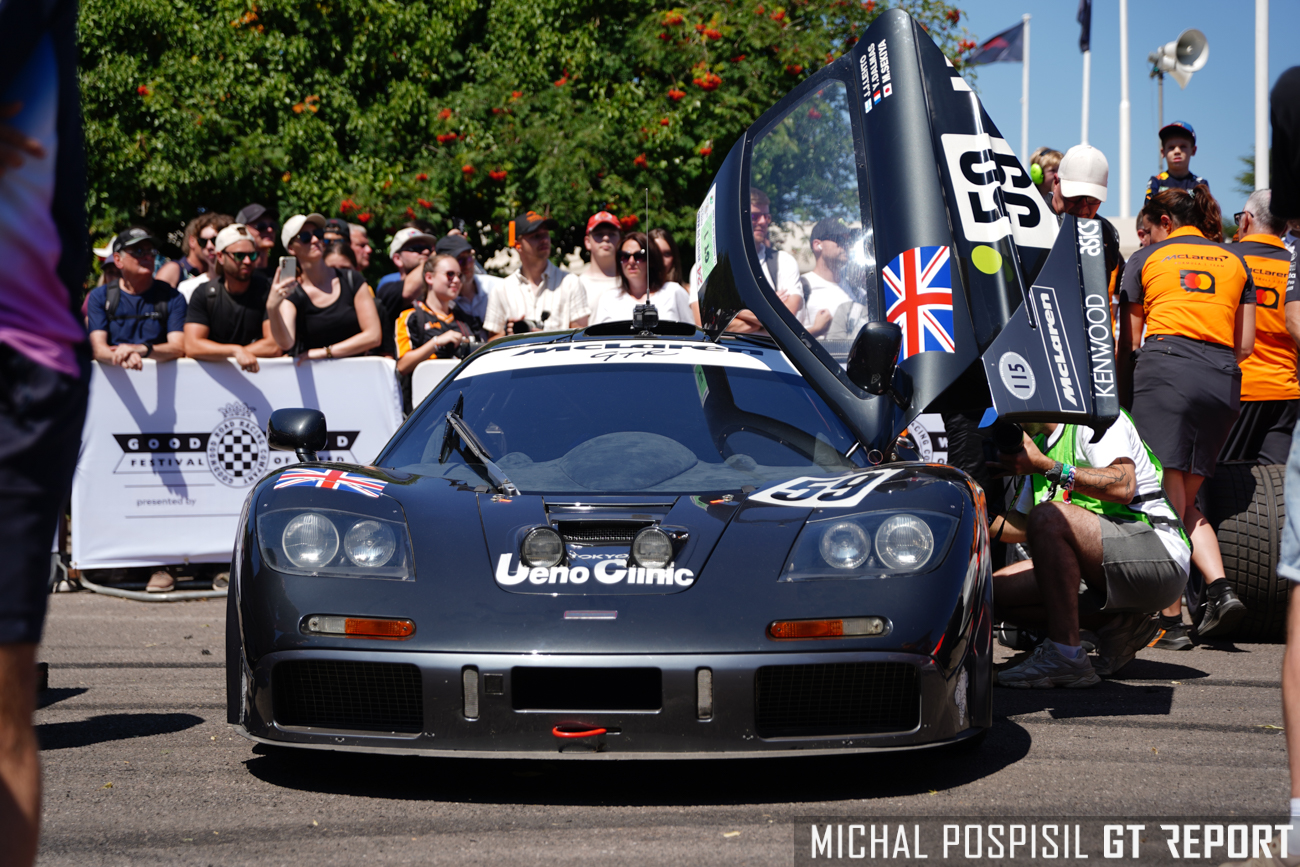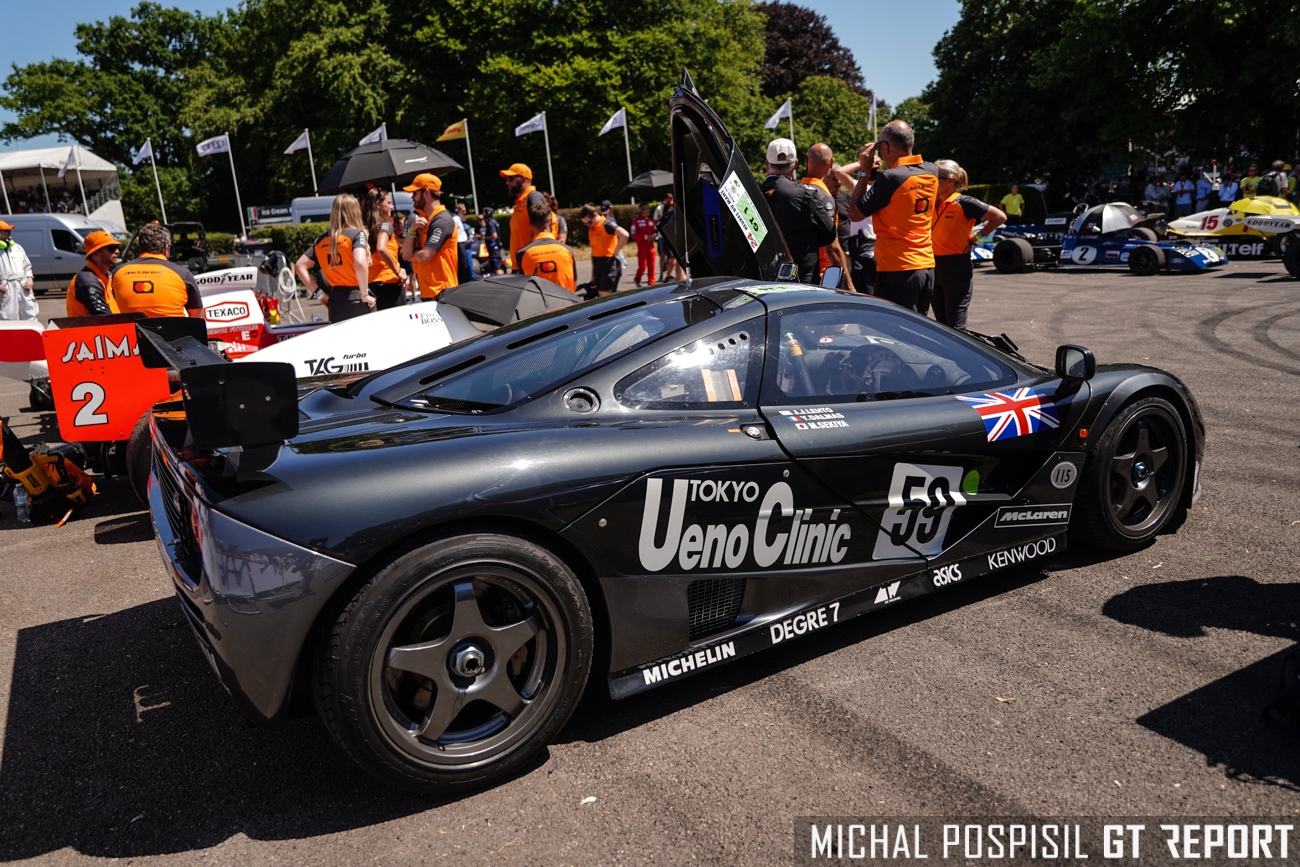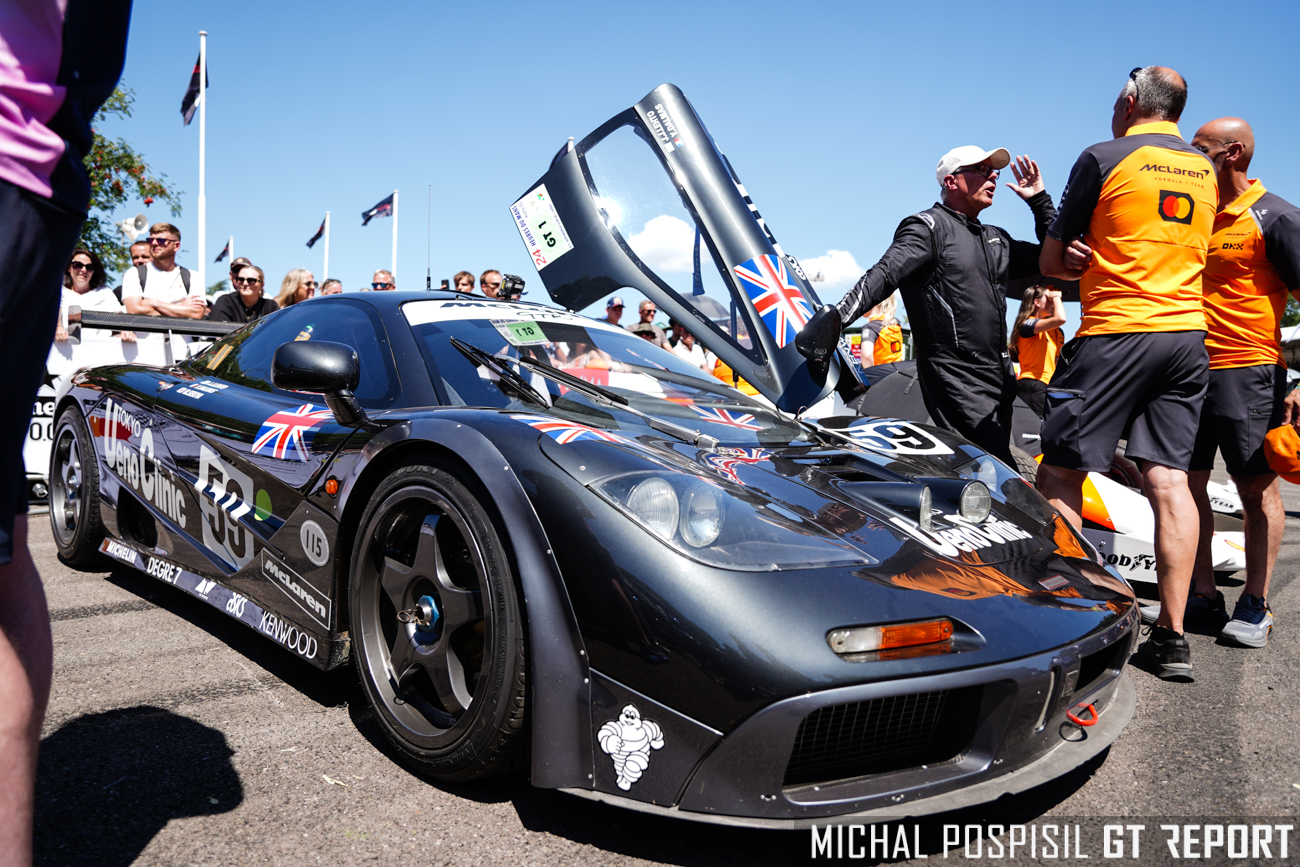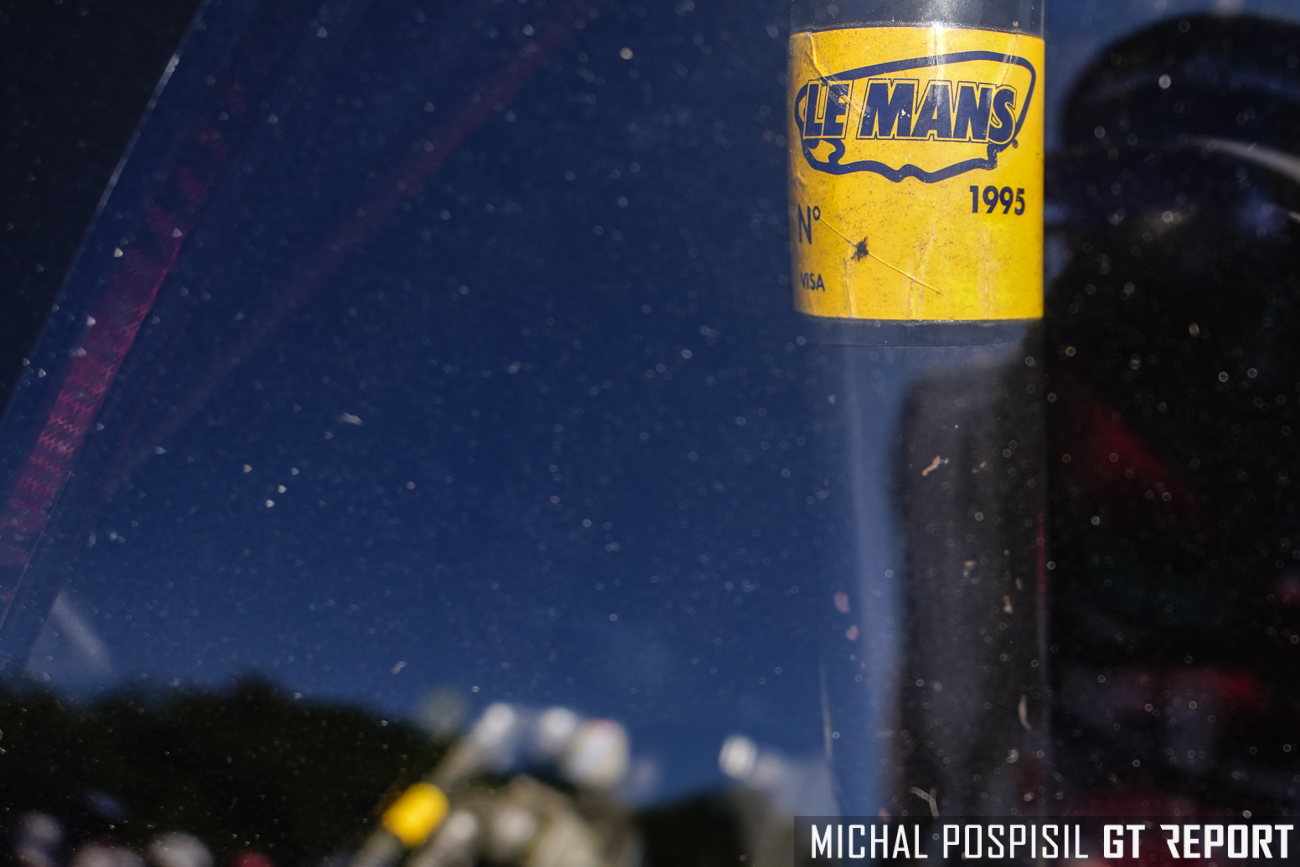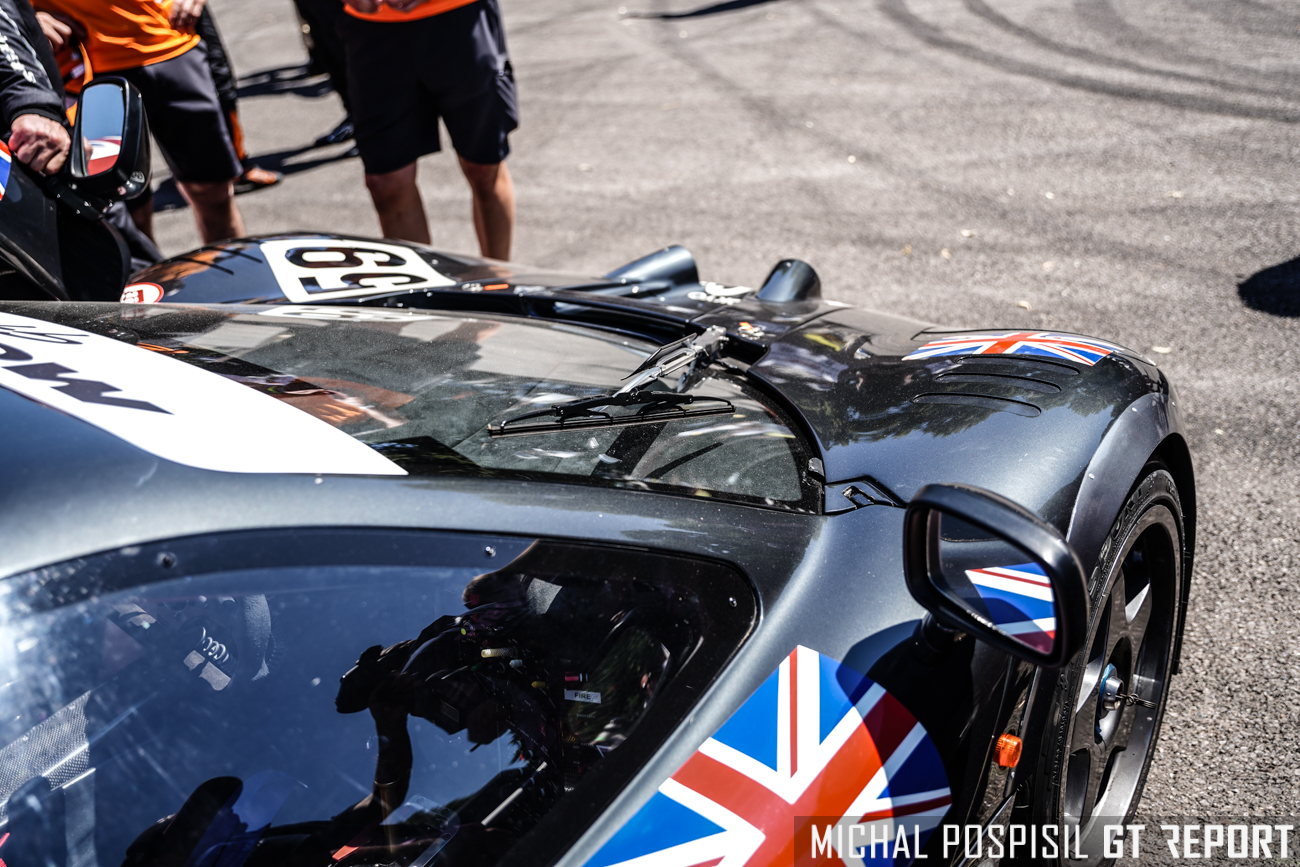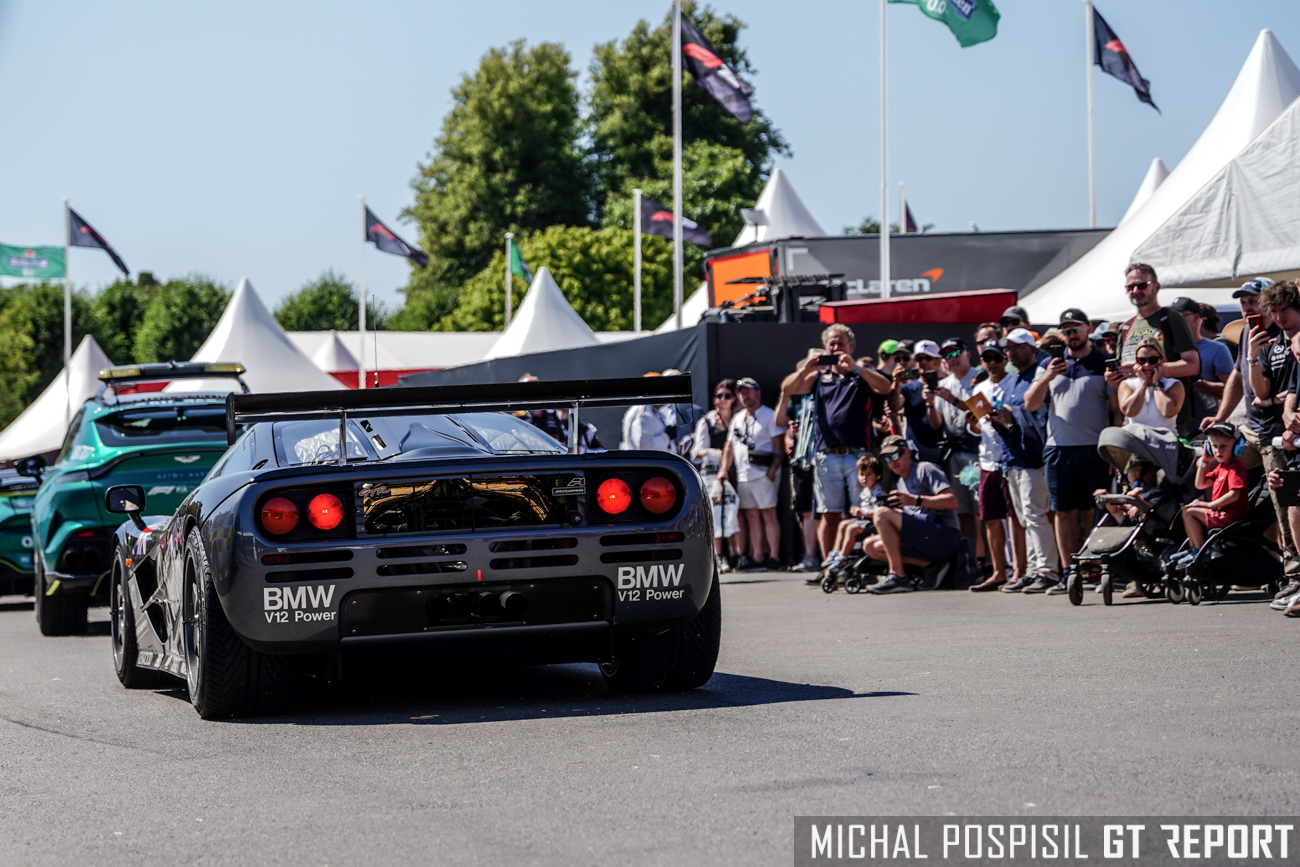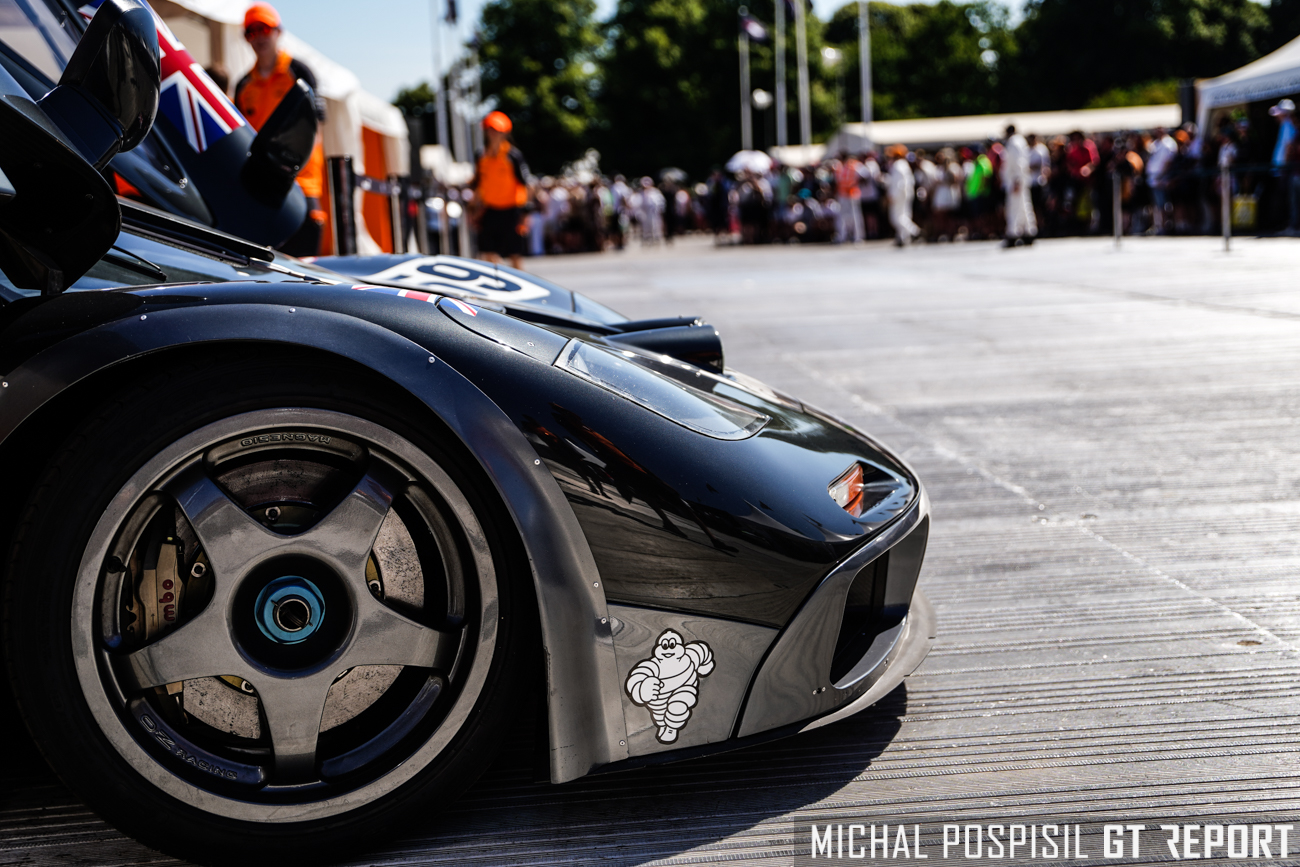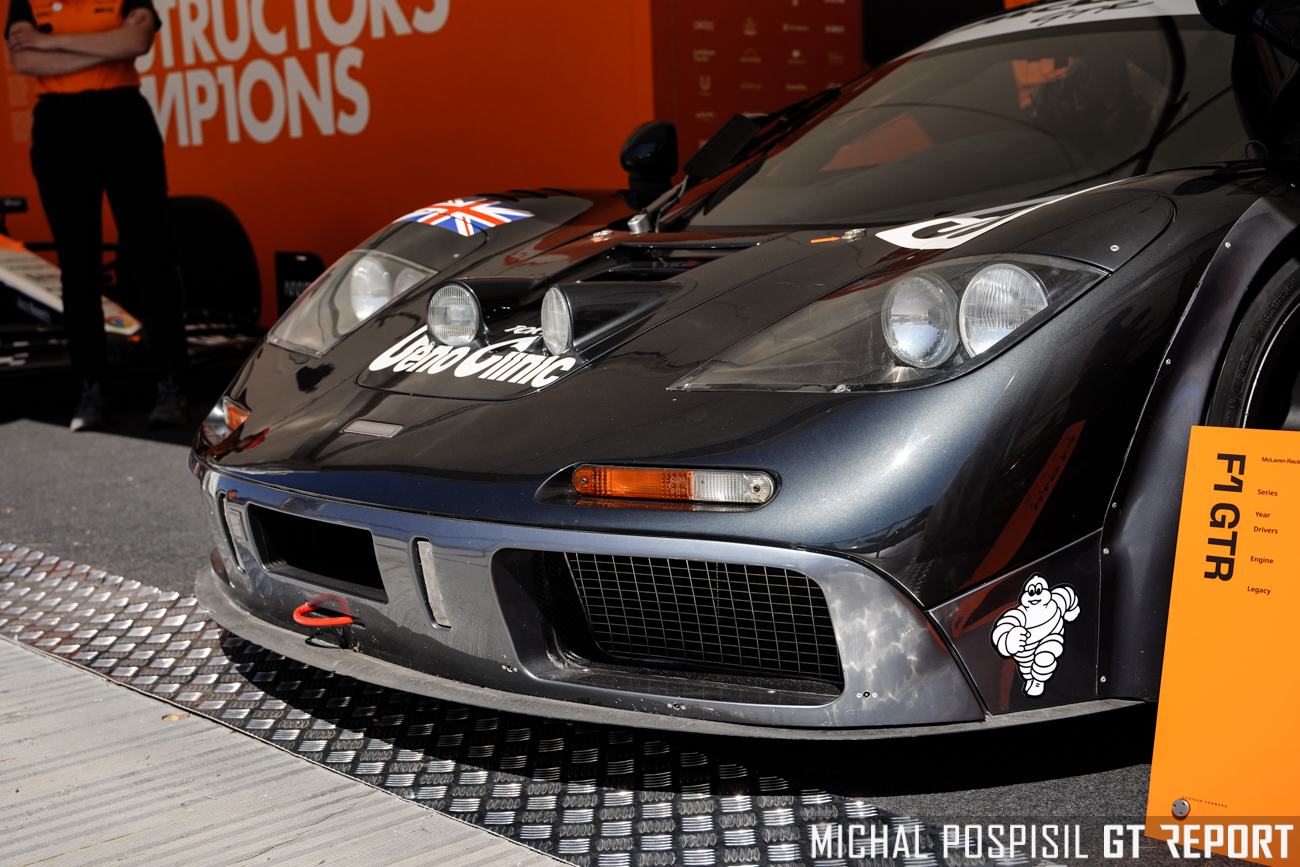
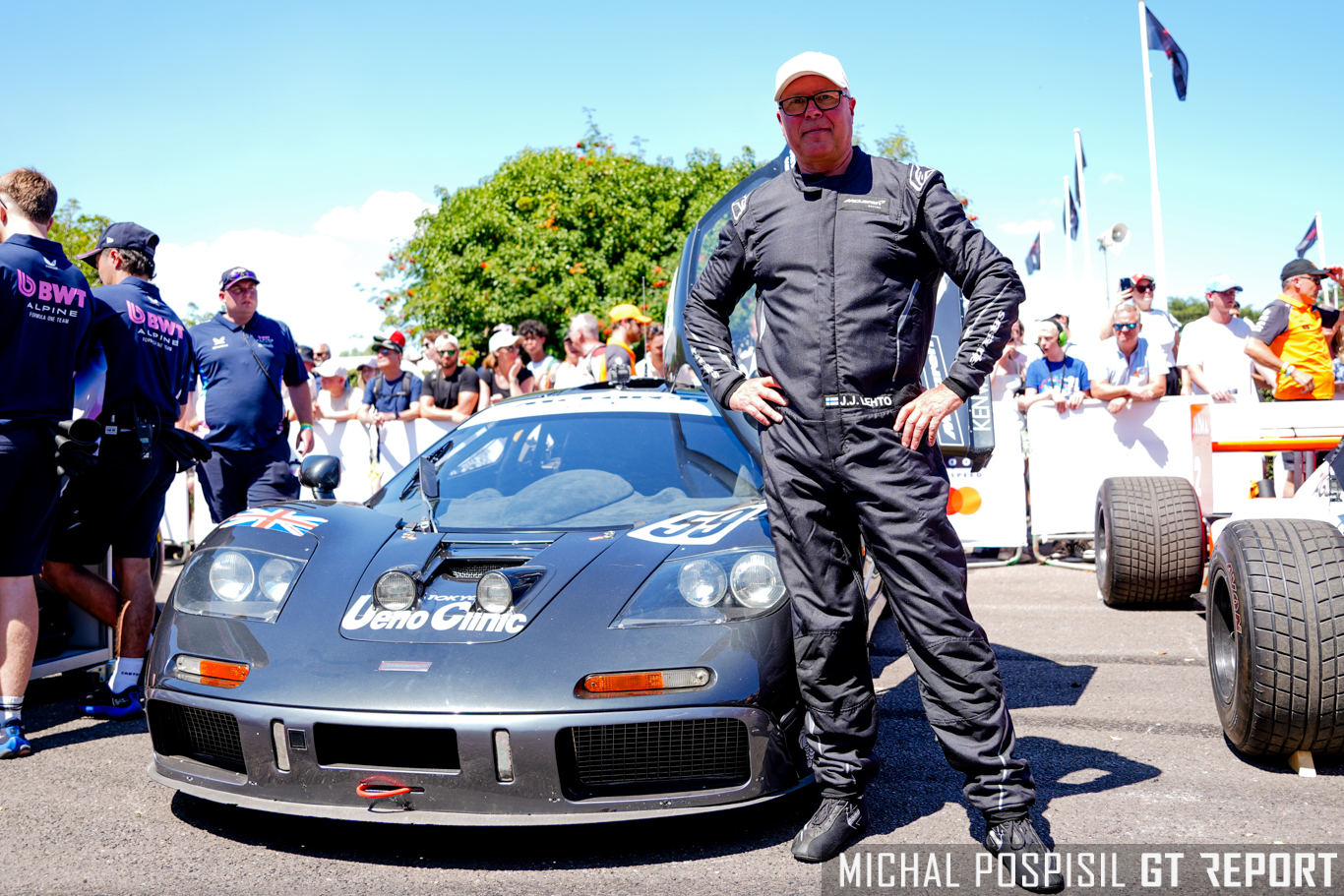
One of the main highlights at this year’s Festival of Speed at Goodwood was a grand celebration of one of the most significant and inventive designers of all time, Gordon Murray. To mark 60 years of his car designs, Goodwood organised a spectacular display of his most famous creations. McLaren Automotive brought a very special treat: the McLaren F1 GTR #59 — the very same machine that triumphed at the 24 Hours of Le Mans 30 years ago — and reunited it with the driver who had taken it to one of the most shocking victories in the history of the race: Finnish driver Jyrki Juhani Järvilehto, better known in motorsport simply as JJ Lehto.
GT REPORT was fortunate enough to get some thoughts from JJ on this legendary car and capture a few photographs of the reunion. So join us for a stroll down memory lane on this sunny and hot afternoon at the magnificent grounds of Goodwood House, where the old tales of racing legends come back to life for one glorious weekend.
The World’s Greatest Motorsport Garden Party
The global motorsport season peaks in the summer, bringing racing action to circuits worldwide, and fans often struggle to keep up. Formula 1 races now take place almost every weekend, and the 24-hour endurance races at Le Mans, Spa, and Nürburgring are already history, alongside countless other championships. Yet one annual event stands apart: it doesn’t focus on wheel-to-wheel battles or record-breaking speed, but it holds a special place on the calendar and in the hearts of motorsport enthusiasts. That event is the famous Festival of Speed at Goodwood, a pilgrimage for thousands from around the world. We visited the festival, the biggest motorsport garden party in the world, filled with legendary cars and drivers from all eras. It’s a true celebration of motor racing, a must-visit for every fan.
A Festival Like No Other
In 1993, Lord March founded the Goodwood Festival of Speed to bring motor racing back to the Goodwood estate — a location that holds a special place in British motor racing history. With a small selection of invited historic vehicles, the first event proved a success, drawing a crowd of 25,000. Today, the festival attracts around 100,000 visitors on each of its three days. Central to the Festival of Speed is the renowned hill climb, a time-trial format that takes participants up a 1.16-mile (1.9 km) course. This challenging ascent features a mix of straights and tight corners, allowing vehicles from different eras and categories to showcase their performance. From contemporary Formula 1 cars, historic GP machines, motorbikes, endurance legends, pre-war land speed record holders and pioneers to rally cars and the latest road-going supercars, the diversity reflects the rich tapestry of automotive history. Spectators can also explore various car displays, including manufacturer showcases and unique exhibits, highlighting the latest innovations in automotive technology. Furthermore, the festival is a unique place where motorsport legends and personalities engage with fans through talks, signings, and demonstrations. The atmosphere is enhanced by thrilling showcases such as the Forest Rally Stage, featuring off-road vehicles, and the Cartier ‘Style et Luxe’ concours d’élégance, celebrating automotive design excellence. Recent years have added drifting and motorbike stunts, filling the track with screeching tyres and clouds of smoke, while the Royal Air Force Aerobatic Team, the Red Arrows, dazzles in the sky.
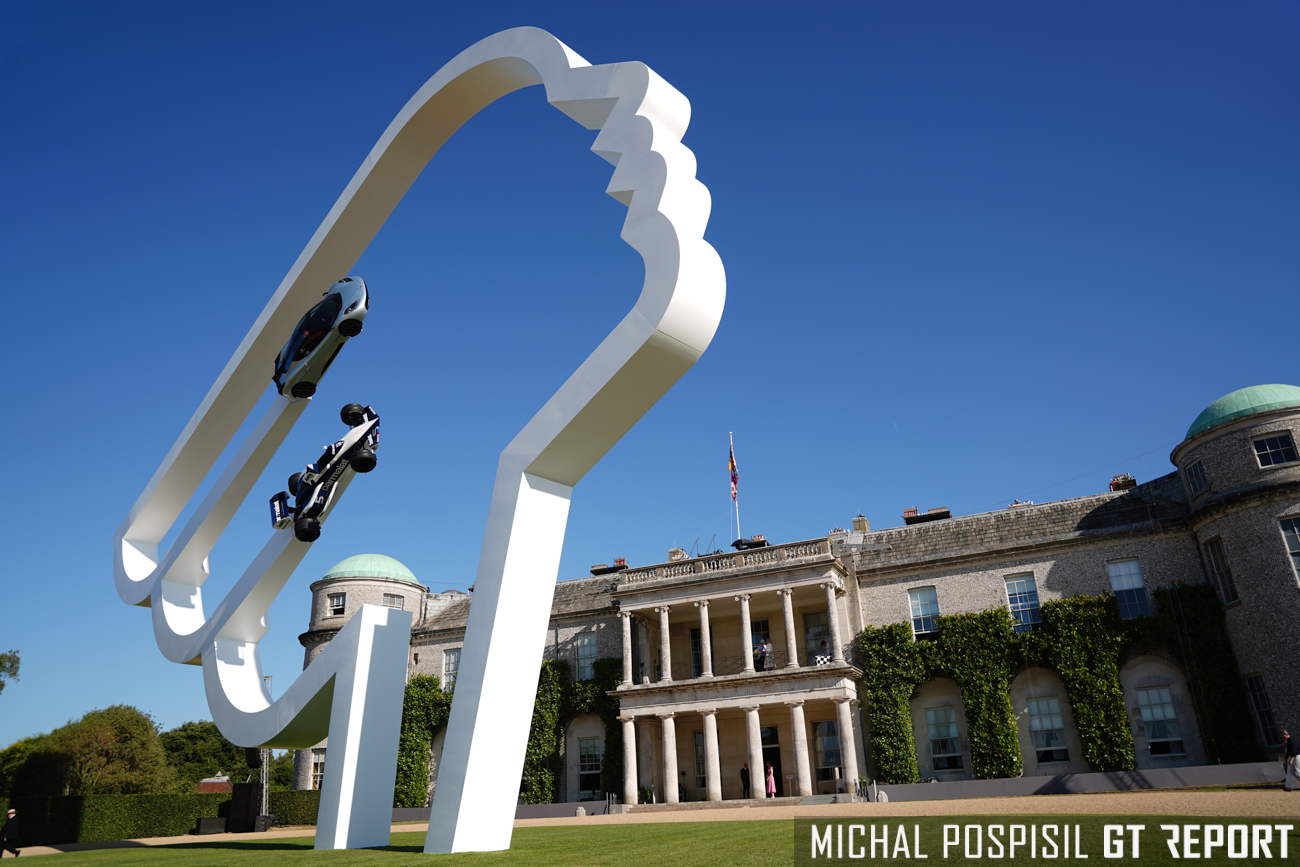
Central feature in front of Goodwood House at the Festival of Speed 2025
Celebrating Icons
Every year, a special theme is dedicated to celebrating an iconic car brand or significant milestone in automotive history. This year, two big occasions were marked at the festival. One of them was the 75th anniversary of Formula 1, which brought together seven world champions: Sir Jackie Stewart, Alain Prost, Emerson Fittipaldi, Mario Andretti, Mika Häkkinen, Nigel Mansell, and Jacques Villeneuve. On this very special occasion, we saw several of these icons reunited with their championship-winning machines. Only at Goodwood can you witness moments such as Alain Prost driving his 1985 championship-winning McLaren MP4/2B, or Mario Andretti behind the wheel of the Lotus 79, the car he took to five victories and the drivers’ crown in 1978. These rare reunions dominated the spotlight, yet another, quieter celebration also caught our attention: a tribute to Gordon Murray himself.
To mark his milestone — Gordon’s 60 years of car design — organisers put together a staggering collection of cars to commemorate this moment in the life of one of motorsport’s greatest engineers. This sensational collection of road and racing cars from Gordon’s rich career included original models from his earliest creations, such as the 1967 IGM Ford T.1 and the Duckhams LM that competed at Le Mans in 1972, to later Brabham and McLaren F1 cars, and GMA’s latest models, the T.33, T.50, and T.50s. Gordon has been a big supporter of Goodwood since the first Festival of Speed in 1993, which he attended with his great friend George Harrison from The Beatles. One of Harrison’s most famous songs, ‘While My Guitar Gently Weeps’, provided the soundtrack for daily Gordon Murray moments in front of Goodwood House, ending with a magnificent fireworks display.
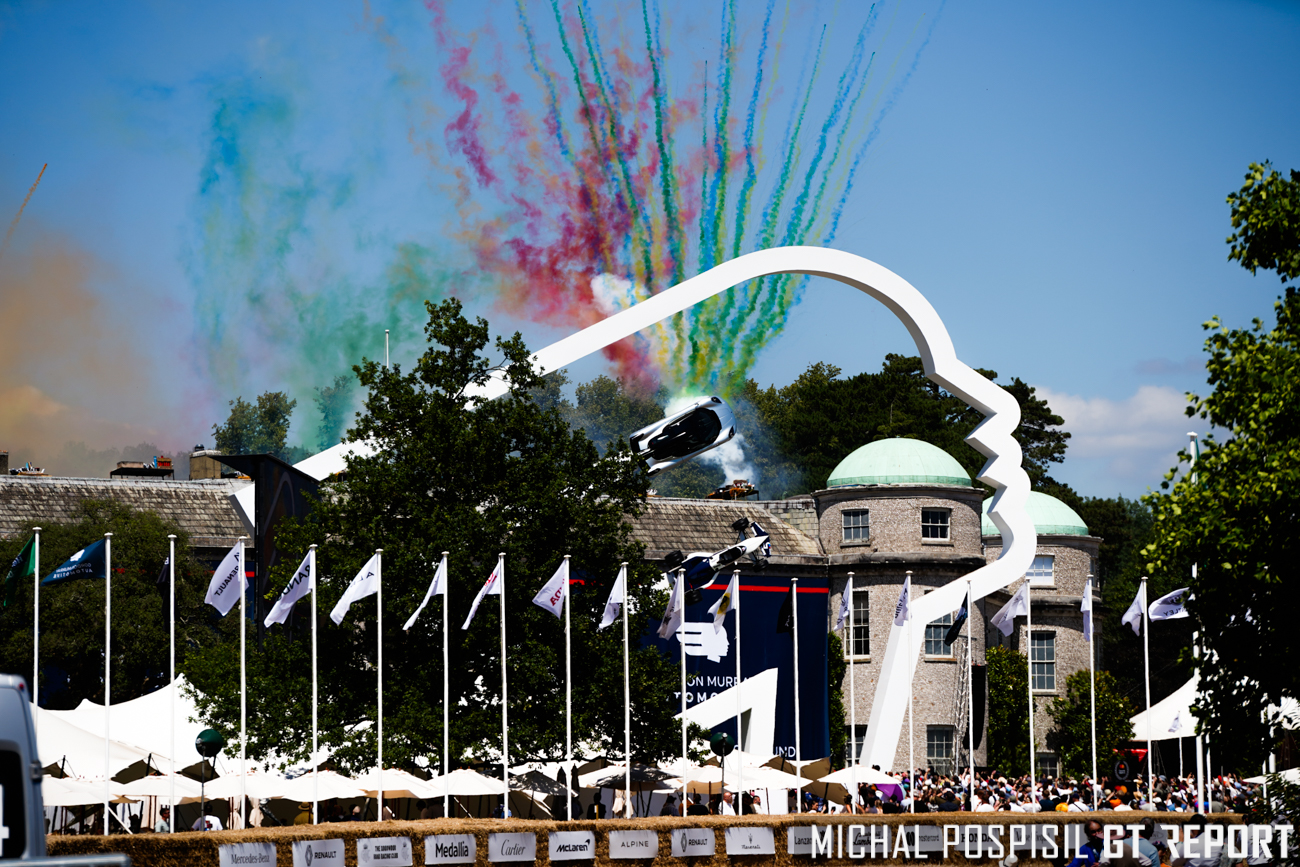
Fireworks at Goodwood House
The Dream Road Car
In the 1980s, Gordon Murray was already a legend in Formula 1. His name became synonymous with innovation, and one car in particular shocked the racing world: the famous one-race wonder, the 1978 Brabham BT46B ‘fan car’. As chief designer for Brabham and later McLaren, he had built many championship-winning race cars. But Murray also had a personal dream — to design the perfect road car. When McLaren won the 1989 F1 Constructors’ Championship, company boss Ron Dennis gave him the green light to pursue his dream. Murray wanted perfection: a central driving seat, a naturally aspirated engine, and a car built with Formula 1 carbon-fibre technology. The F1’s three-seat layout put the driver in the middle, Formula 1-style, which gave it perfect symmetry for handling, unmatched visibility, and a feeling of total control. It was the first production road car with a carbon-fibre monocoque chassis, decades ahead of its time. Magnesium, titanium, and Kevlar were used extensively as every gram counted. Despite its power, the car weighed only 1,138 kg (2,509 lbs).
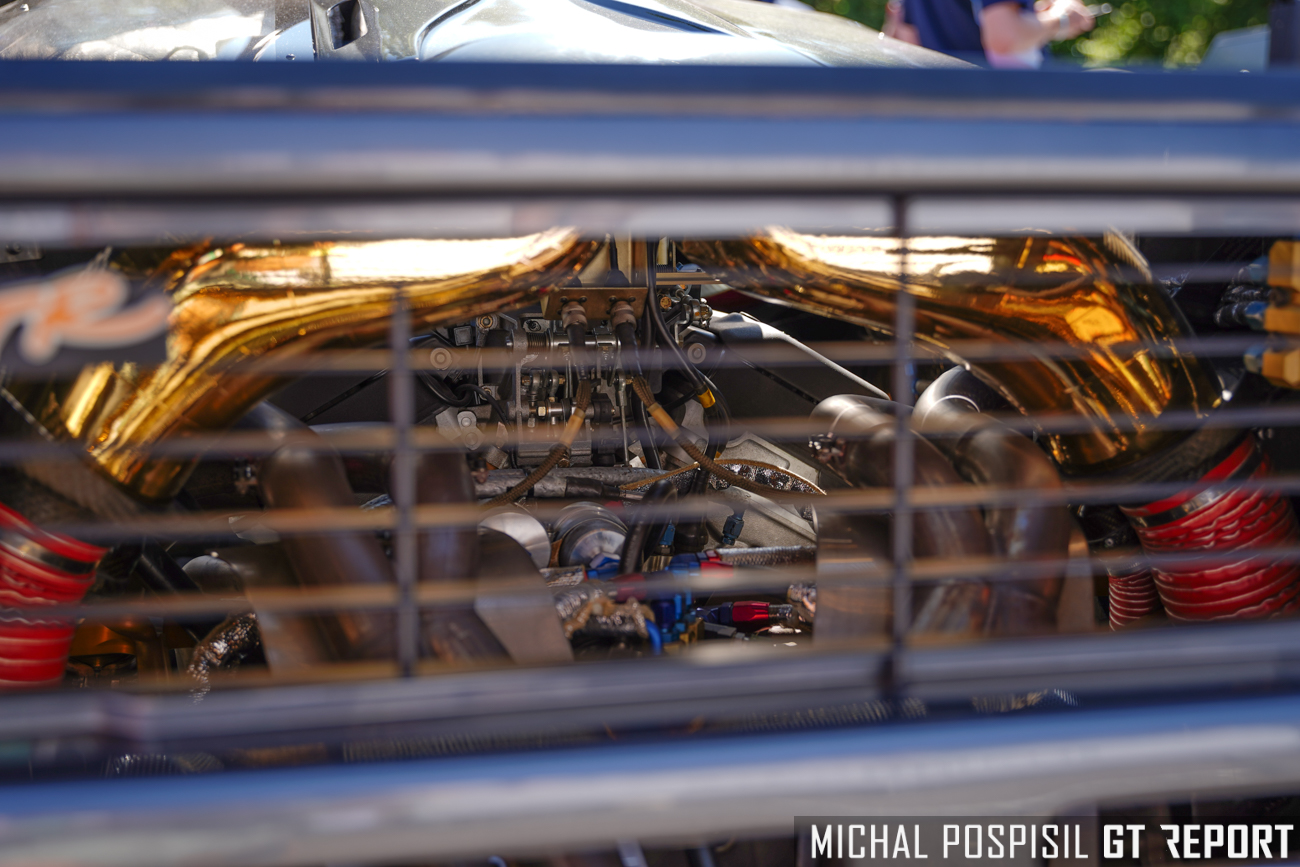
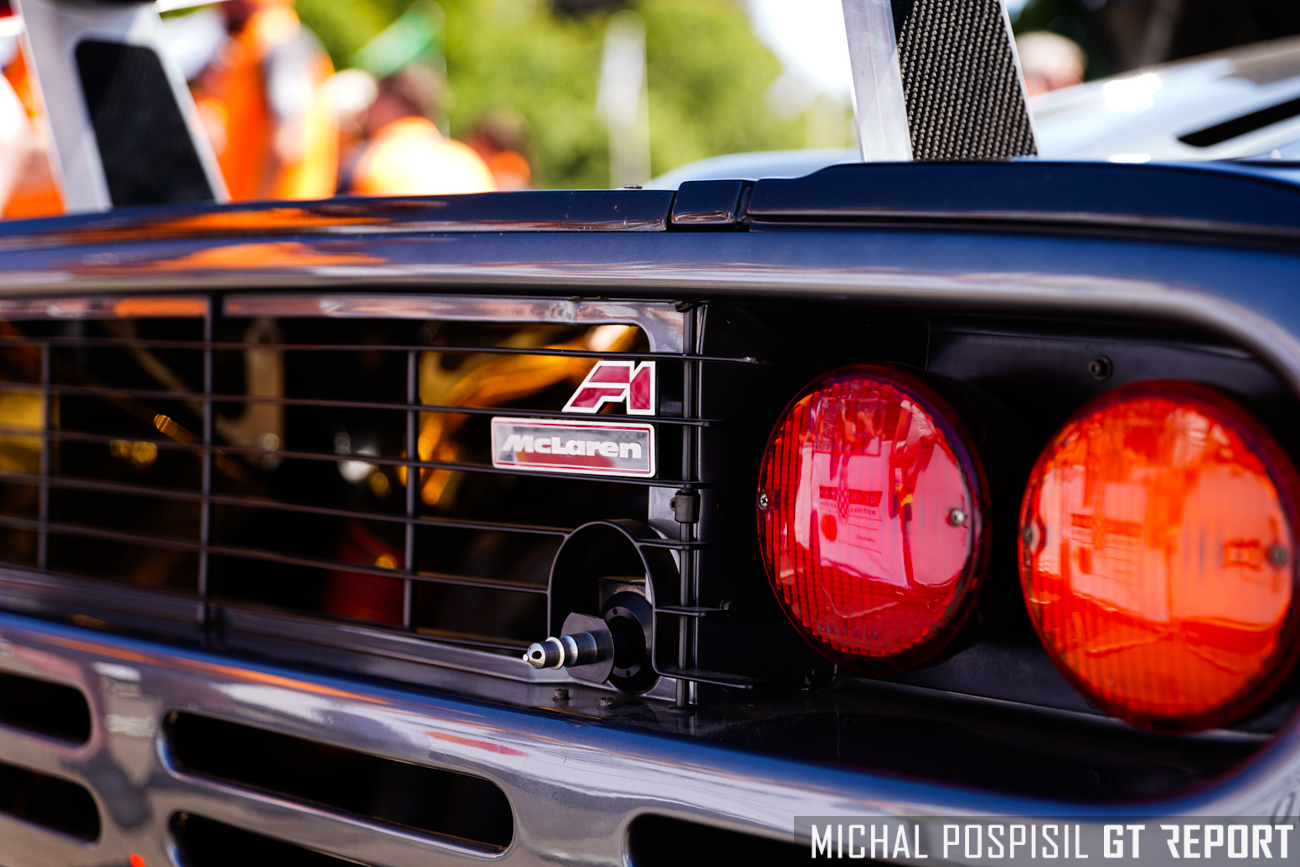
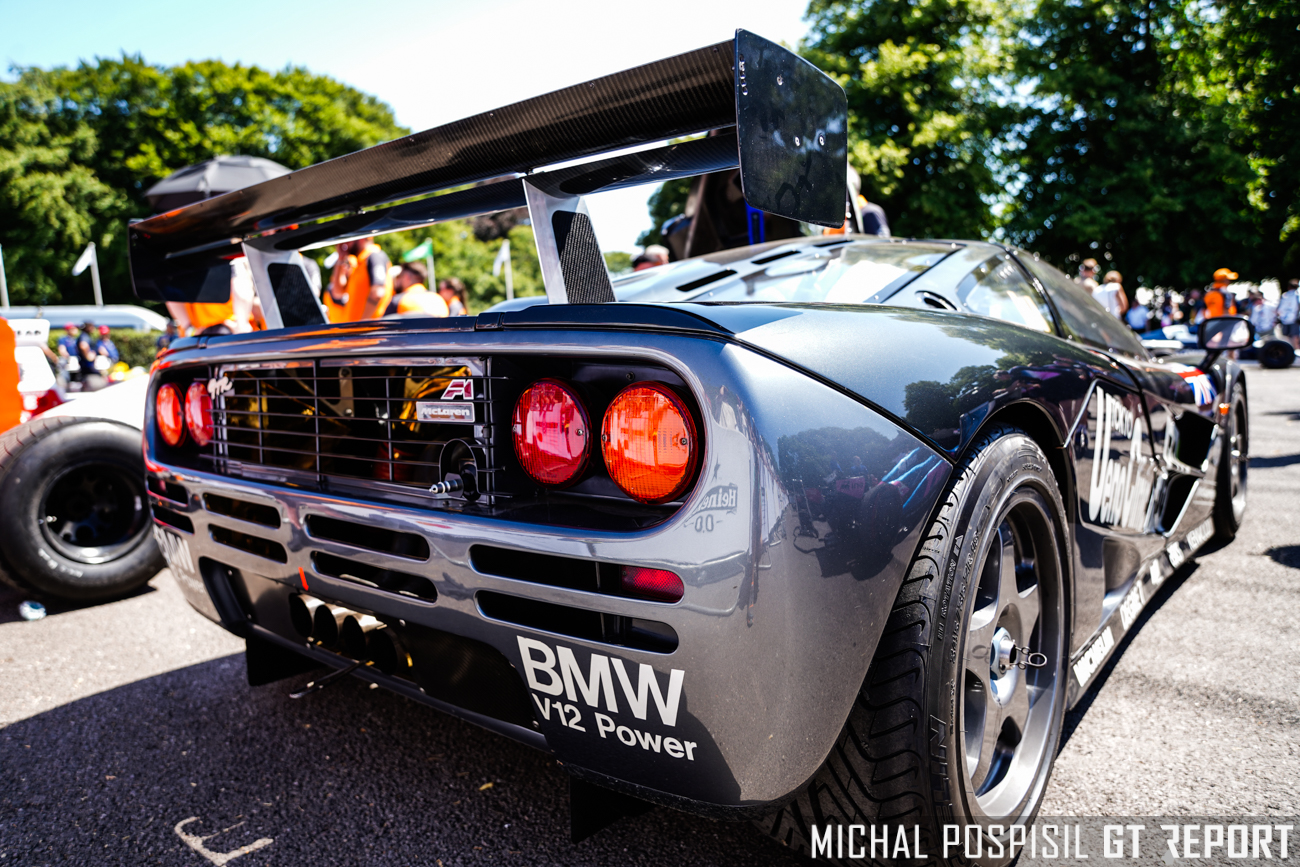
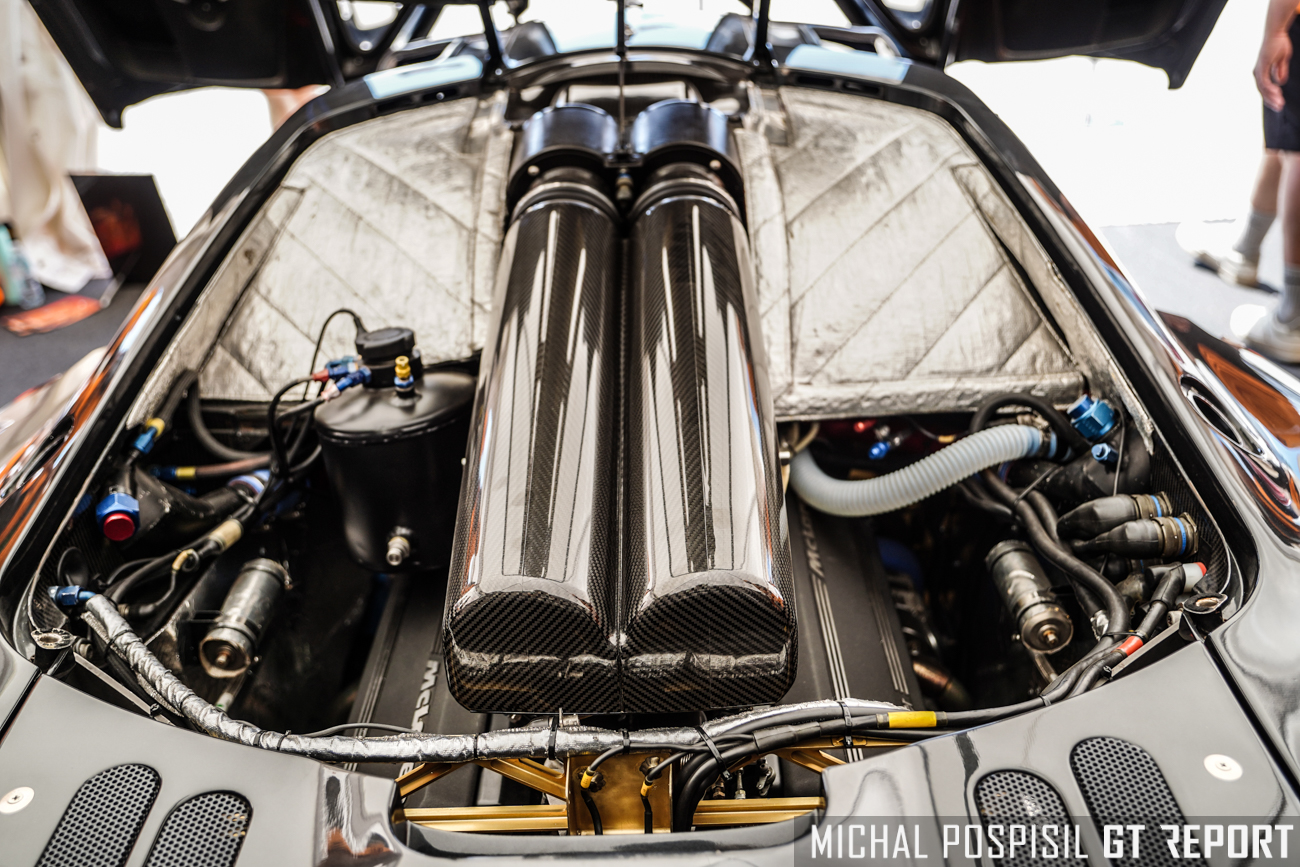
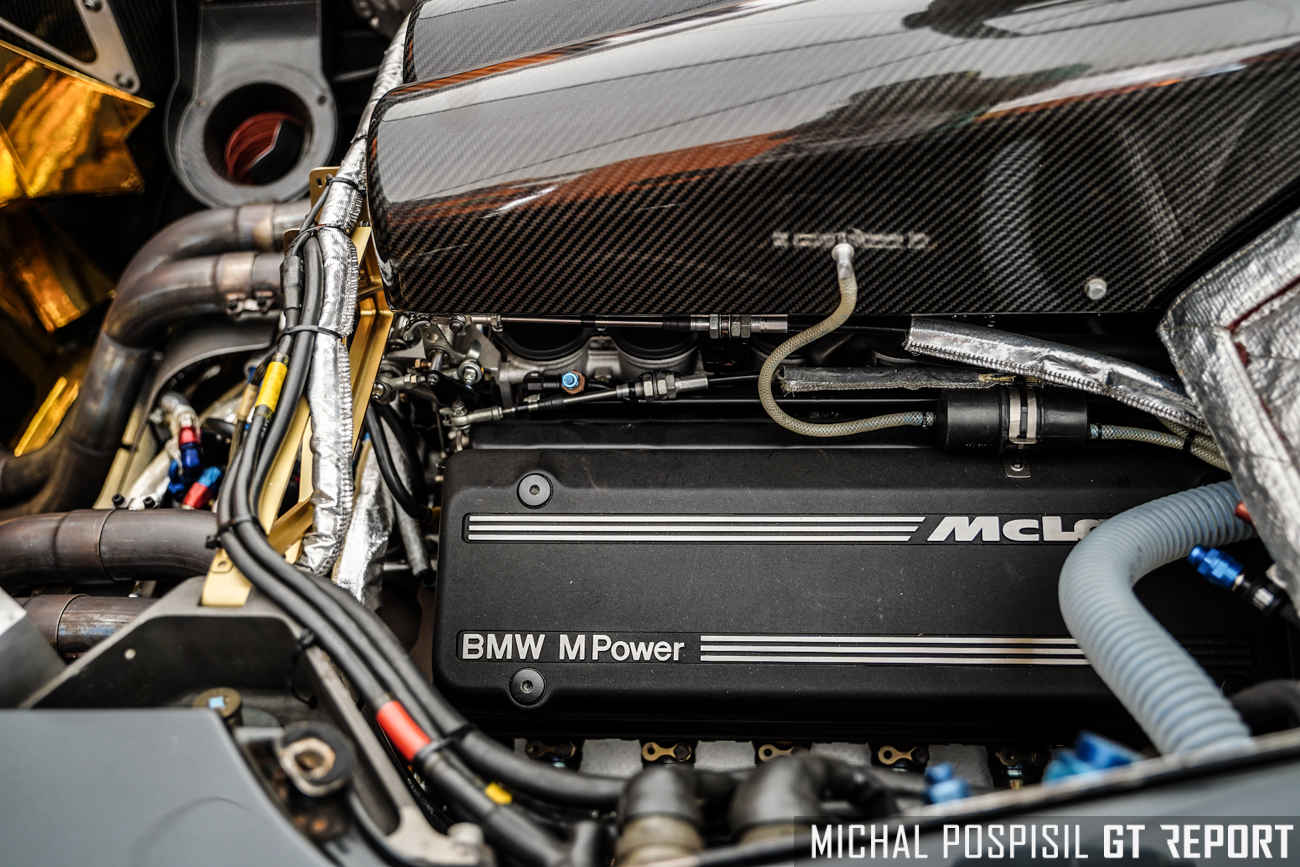
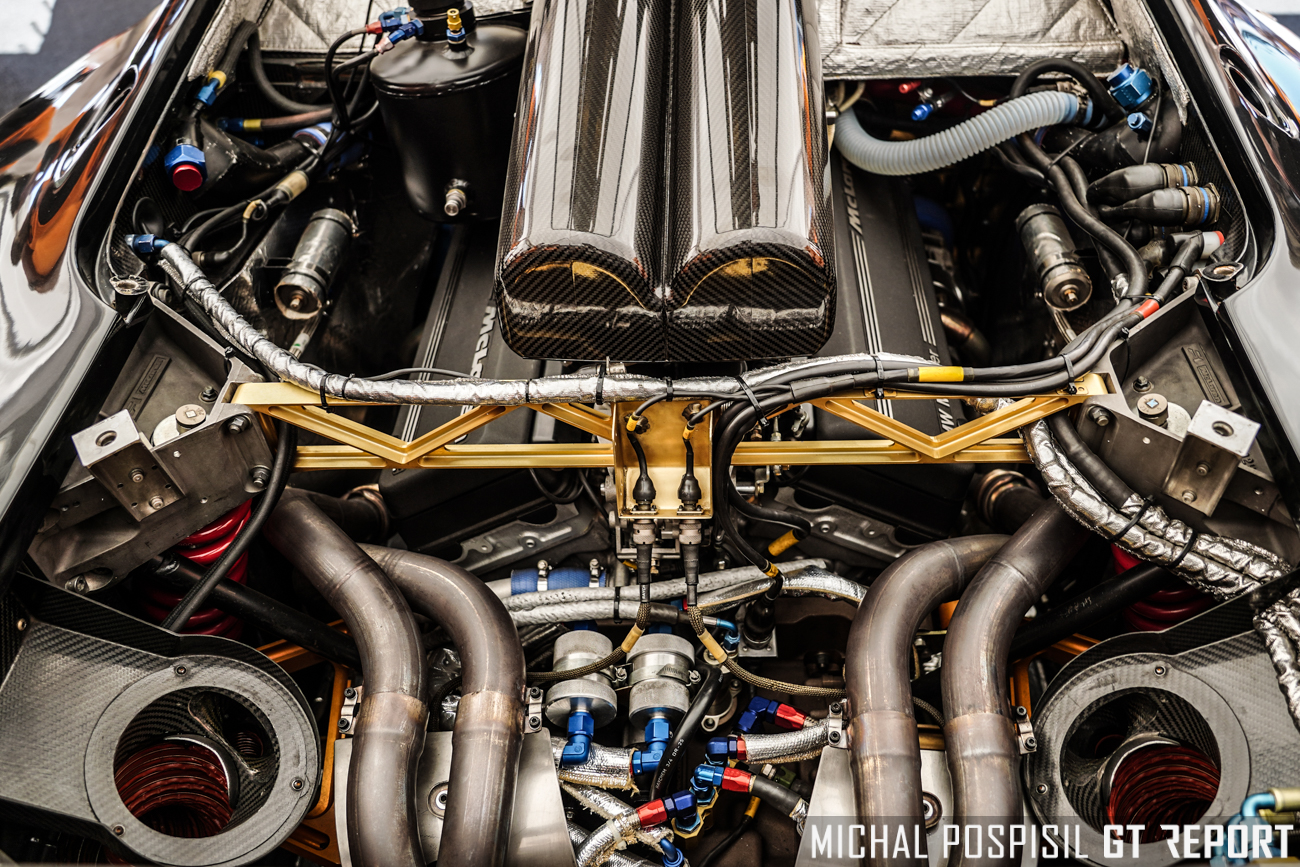
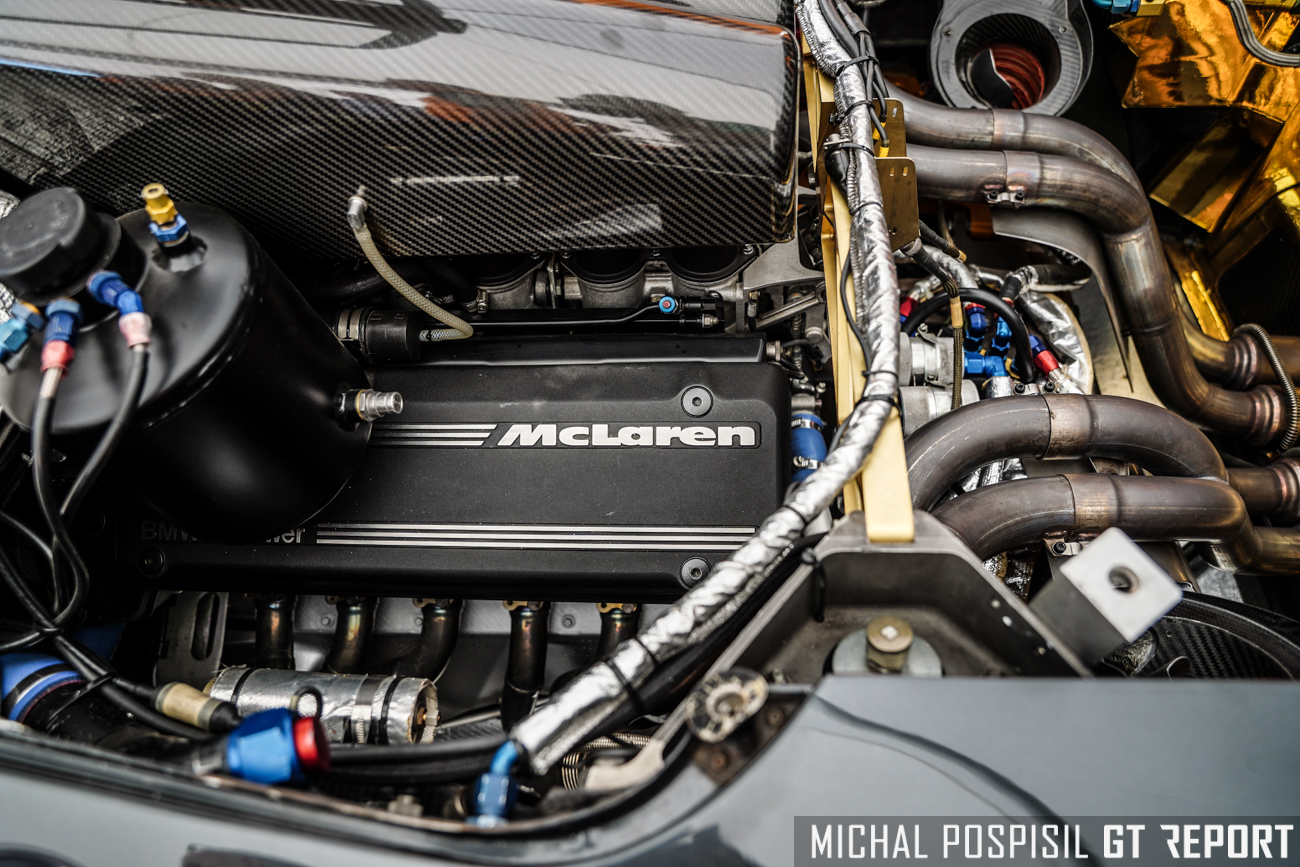
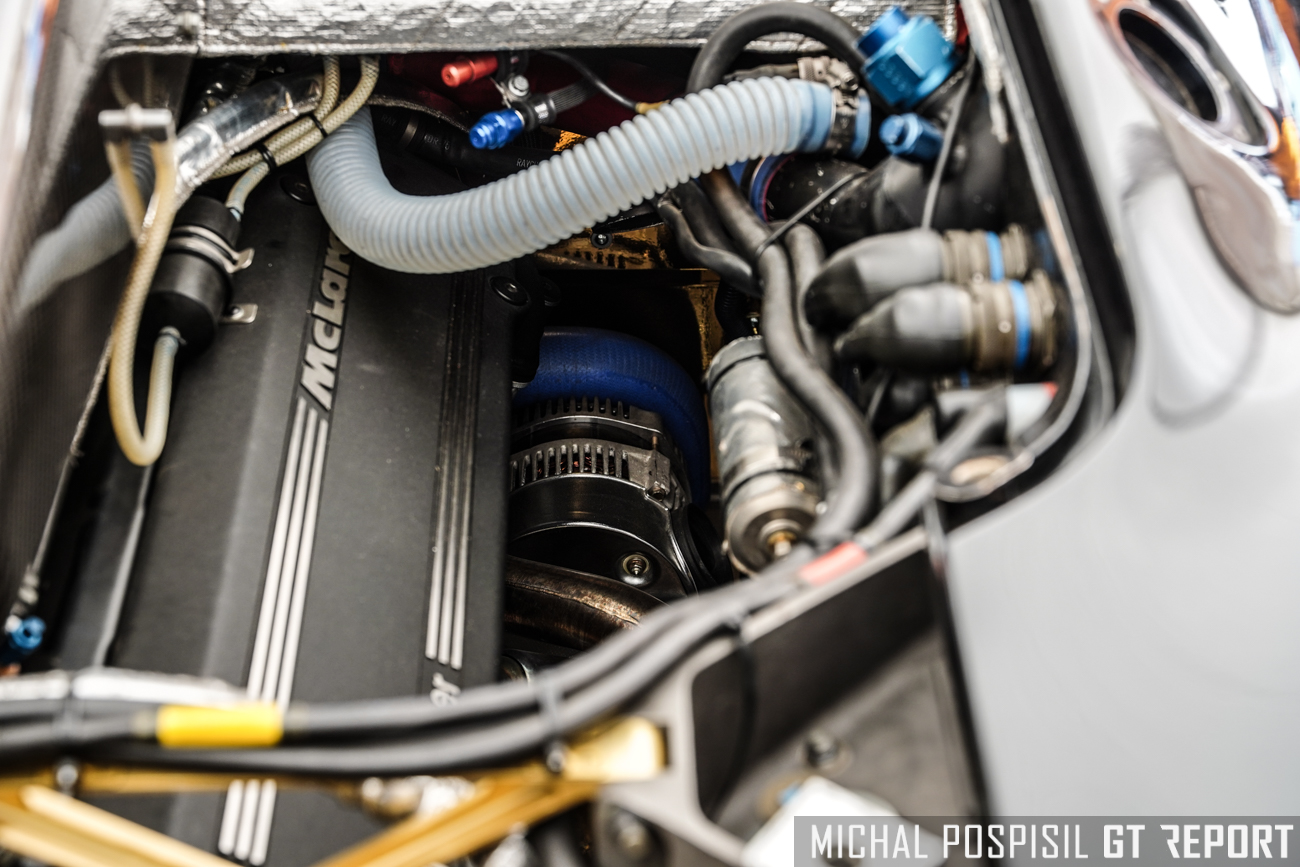
Murray convinced BMW Motorsport to build a bespoke 6.1‑litre naturally aspirated V12, designed exclusively for the F1. No turbocharging, just raw, instant throttle response. It produced 618 hp, but revved smoothly and reliably, even at high speed. The engine bay was even lined with 24-carat gold foil for heat shielding. When it debuted in 1992, the McLaren F1 shocked the world. It could seat three, cruise quietly, yet blast to 240 mph, making it the fastest car ever made. His vision wasn’t about numbers on paper; it was about purity and balance. Where other supercars chased more power or extreme styling, the F1 was about lightweight engineering, driver focus, and flawless execution. It had no ABS or traction control, no power steering, and still used a gear stick despite Formula 1 cars already adopting paddle-shift systems. Everything was about the raw connection between driver, machine, and road. The car wasn’t just fast — it was a statement of philosophy. Murray wanted a car that was both usable every day and the fastest in the world, a driver’s machine without compromise. That goal was achieved: the car became one of the most desirable ever built.
The McLaren F1 GTR
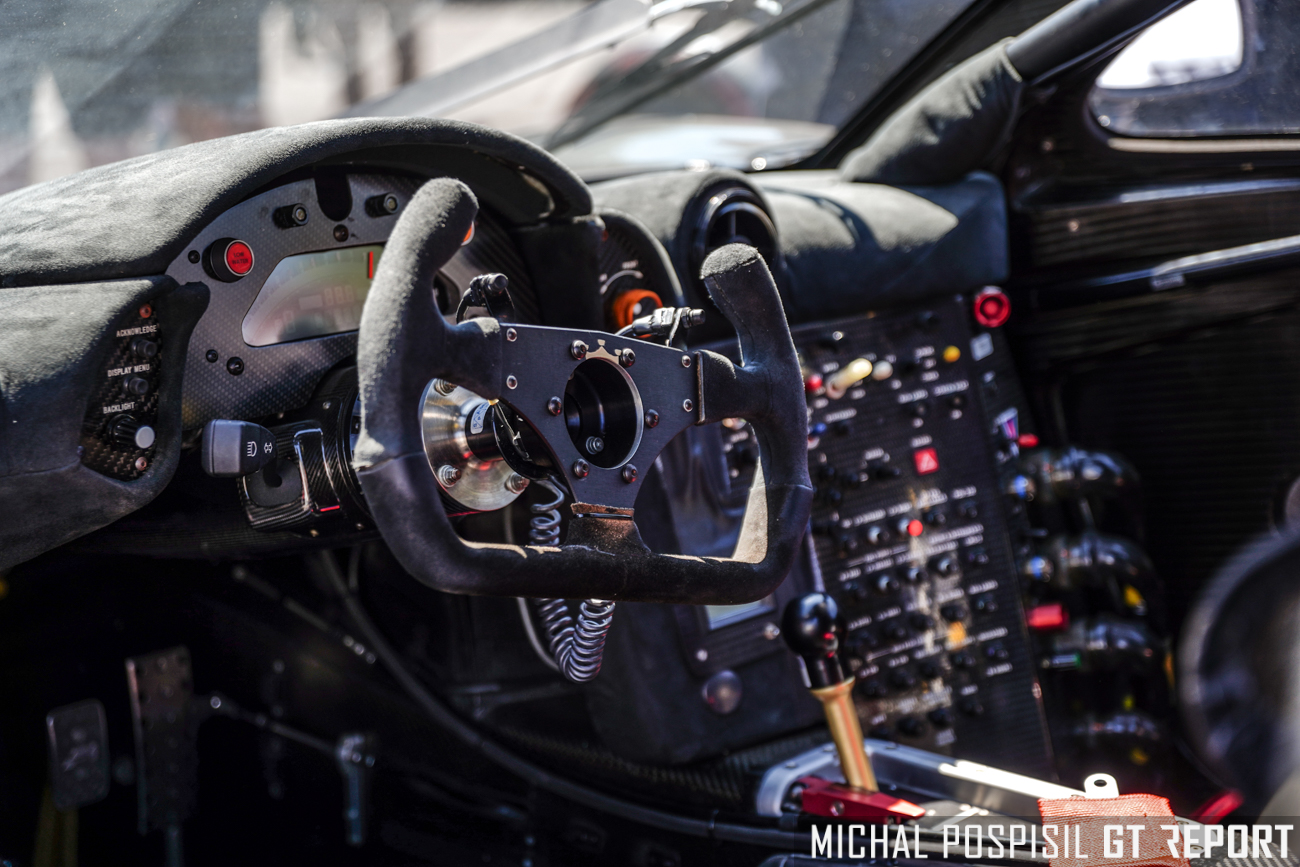
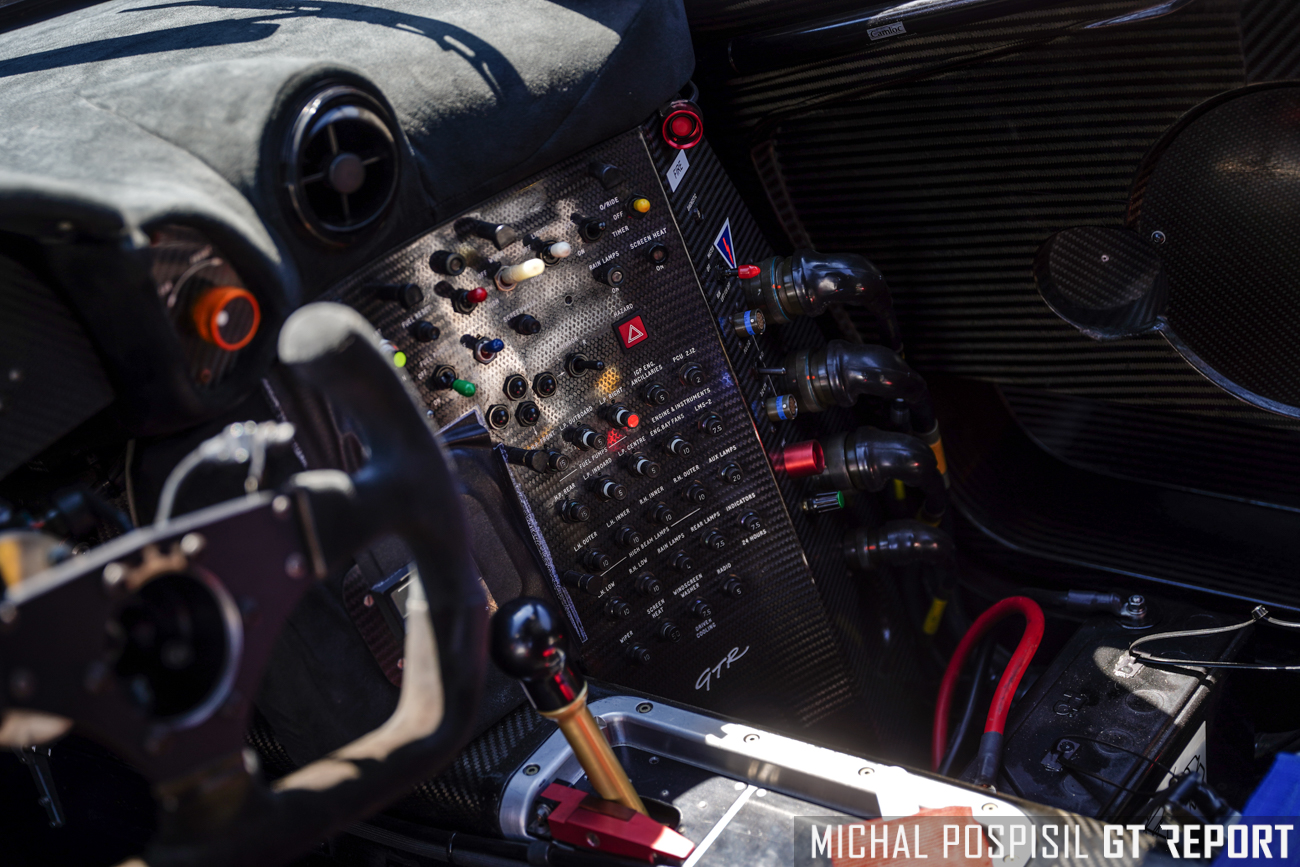
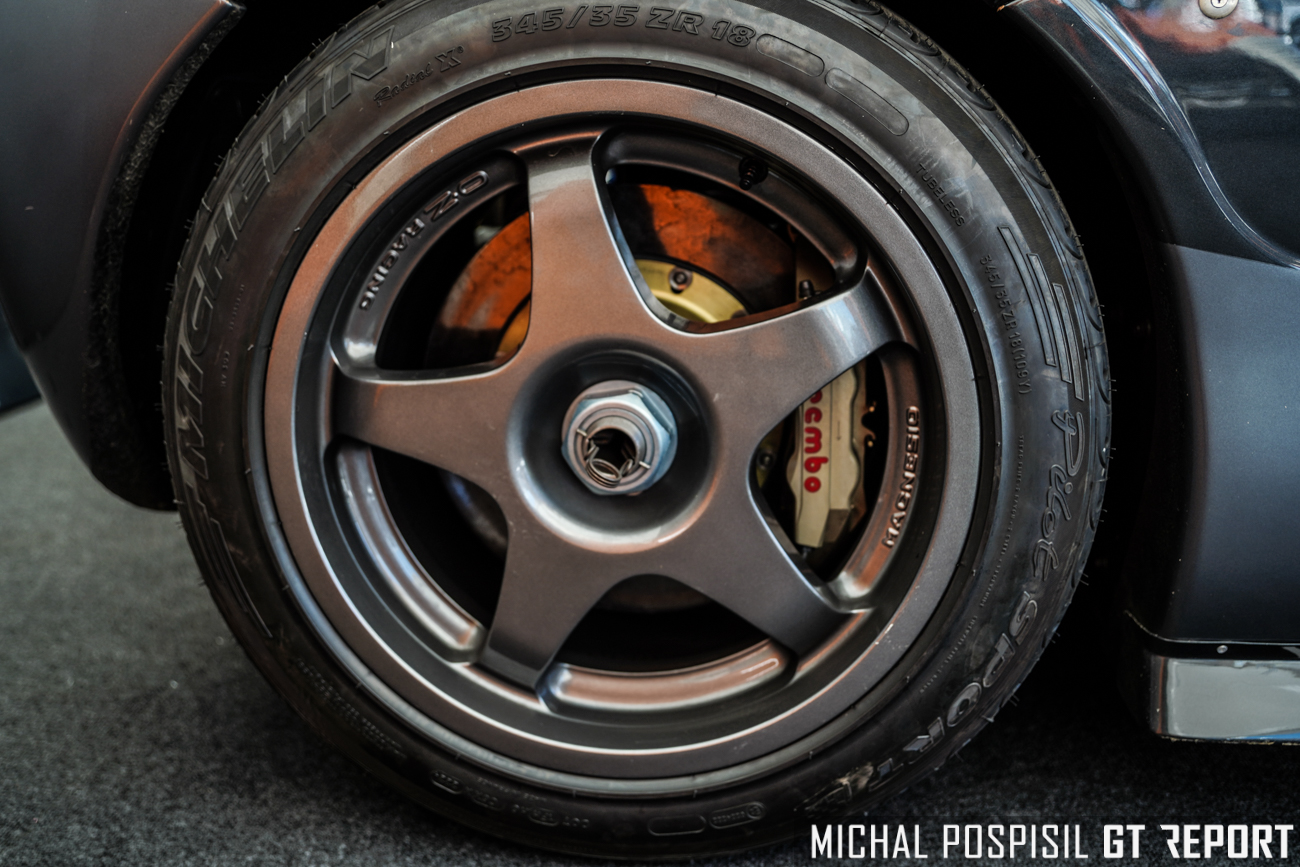
Soon after the F1’s launch, wealthy customers began asking McLaren if they could race it in the newly revived GT racing series. At first, McLaren resisted, but eventually, customer demand convinced them to adapt the F1 into a race car — and so the F1 GTR was born in 1995. The transformation was surprisingly minimal compared to purpose-built race machines. It was stripped of its luxuries, the interior fitted with FIA safety gear and a roll cage, aerodynamic tweaks were added, including a large rear wing, and steel brakes were replaced with carbon ones, reducing weight further to 915 kg. The engine was slightly detuned to meet regulations (from 618 hp to ~600 hp). Crucially, the BMW V12 remained largely unchanged — it was so robust that no deep re-engineering was needed. Customers asked, and McLaren delivered a car that immediately dominated the BPR Global GT Series, taking multiple race wins. In short: the McLaren F1 GTR was never meant to exist, but when it did, it shocked the racing world by proving that the world’s best road car could also conquer the world’s toughest race. One old business saying comes to mind: the customer is always right!
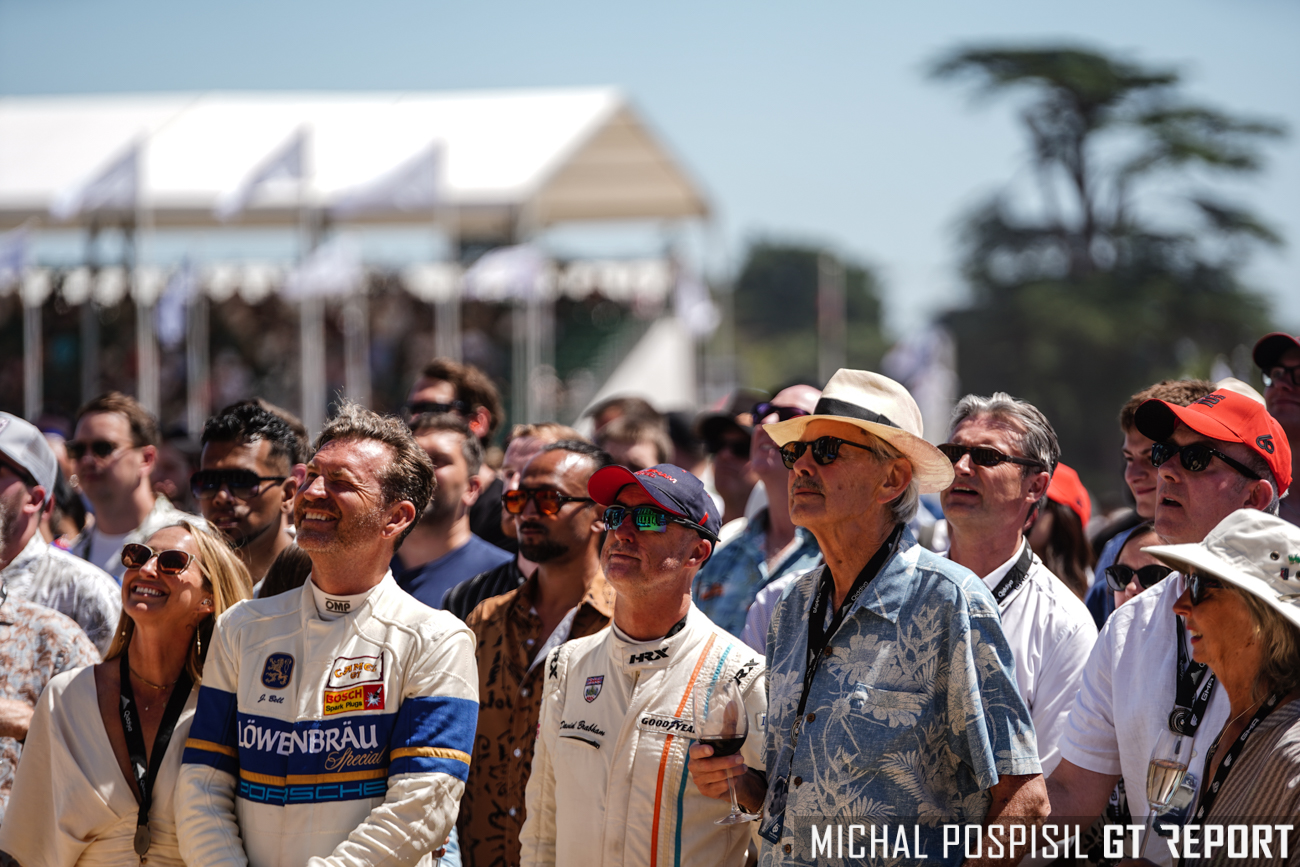
Gordon Murray celebrating 60 years of his car design at the Festival of Speed
The Reunion with JJ Lehto
Now, 30 years later, we are standing here in front of Goodwood House, feeling privileged to celebrate these amazing stories and achievements. When all the cars gathered for the final Gordon Murray tribute of the weekend on Sunday afternoon, we wanted to have a closer look at this legendary car #59 and perhaps even chat with JJ Lehto, one of the three drivers who took it to its famous victory at La Sarthe exactly three decades ago. But the car was nowhere to be seen. After the fireworks had finished and the crowd began to disperse, we headed back towards the paddocks.
To avoid traffic, we took a shortcut through the assembly area to check out the next batch of cars lining up before heading to the start line. The entire assembly area was filled with Formula 1 cars from different eras, waiting for their moment to commemorate the 75th anniversary of F1. The first we encountered was the 1992 championship-winning Williams FW14B — the famous Red Five — hiding under the canopy of trees from sweltering heat exceeding 30 degrees Celsius. Standing next to it was Nigel Mansell himself, admiring the car and chatting with mechanics preparing it for its last run of the weekend. Moving along a plethora of F1 cars, which looked like an outdoor museum, we encountered two more legends deep in conversation: Emerson Fittipaldi and Mario Andretti, probably reminiscing about the good old days. If that wasn’t enough, we spotted Jacques Villeneuve preparing to have a go in Niki Lauda’s 1975 championship-winning Ferrari 312T. Further in the distance, we instantly recognised Sir Jackie Stewart in his signature green tartan trousers and flat cap. We heard that Mika Häkkinen was somewhere nearby too. Adrian Newey also passed by in his green Aston Martin-branded overalls, earlier in the day having driven one of his prize possessions, a Lotus 49B from 1968. This was a real ‘pinch me’ moment for every motorsport fan lined up in the area — everyone wanted to catch at least a glimpse of these legends.
There was a large gathering of people in papaya orange t-shirts in the far corner. As we got closer, it became clear that the entire McLaren team present at the Festival was forming a team photo with four-time world champion Alain Prost. Our attention was instantly drawn to the Professor, sitting on the left front tyre of his 1985 title-winning McLaren MP4/2B. It’s not often you get an opportunity to see one of the greatest F1 drivers of all time in person, and no one could be blamed for feeling a little starstruck. After a few moments we noticed the other person in black overalls sitting on the opposite tyre — to our surprise, it was JJ Lehto, with the black car #59 right behind him. It was the only non–single-seater car in this particular batch dedicated to celebrating the 75th anniversary of Formula 1. A stroke of luck! Supposedly, the car earned this privilege not just by bearing F1 in its name but by being considered almost like a Formula 1 car with a bonnet, thanks to the technology and know-how shared with F1 at the time.

McLaren team photo with Alain Prost and JJ Lehto with the 1985 title-winning McLaren MP4/2B
After the team photo was taken, we took the opportunity to approach JJ for a short interview about the car and the race that cemented its place in motorsport history.
First of all, we asked JJ how it felt to be reunited with this car after 30 years since that famous victory. JJ: “Well, it always feels nice because McLaren is really taking care of the heritage and they are always remembering us very well. But coming back to the car, I haven’t driven it for 30 years so it was really nice to drive it again for the first time since. But, you know, it’s like, you get back in the car and, ahh, okay… this is how it was, all the buttons, you know how they worked and things like that. So it really felt like straight back at home. It’s like you’re happy staying out of the car for a week and then again when you are back in the car.”
It certainly looked like JJ gelled with the car incredibly well back then, and even after 30 years he still remembers exactly how everything worked. A true professional.
Le Mans 1995 – The Miracle of Car #59
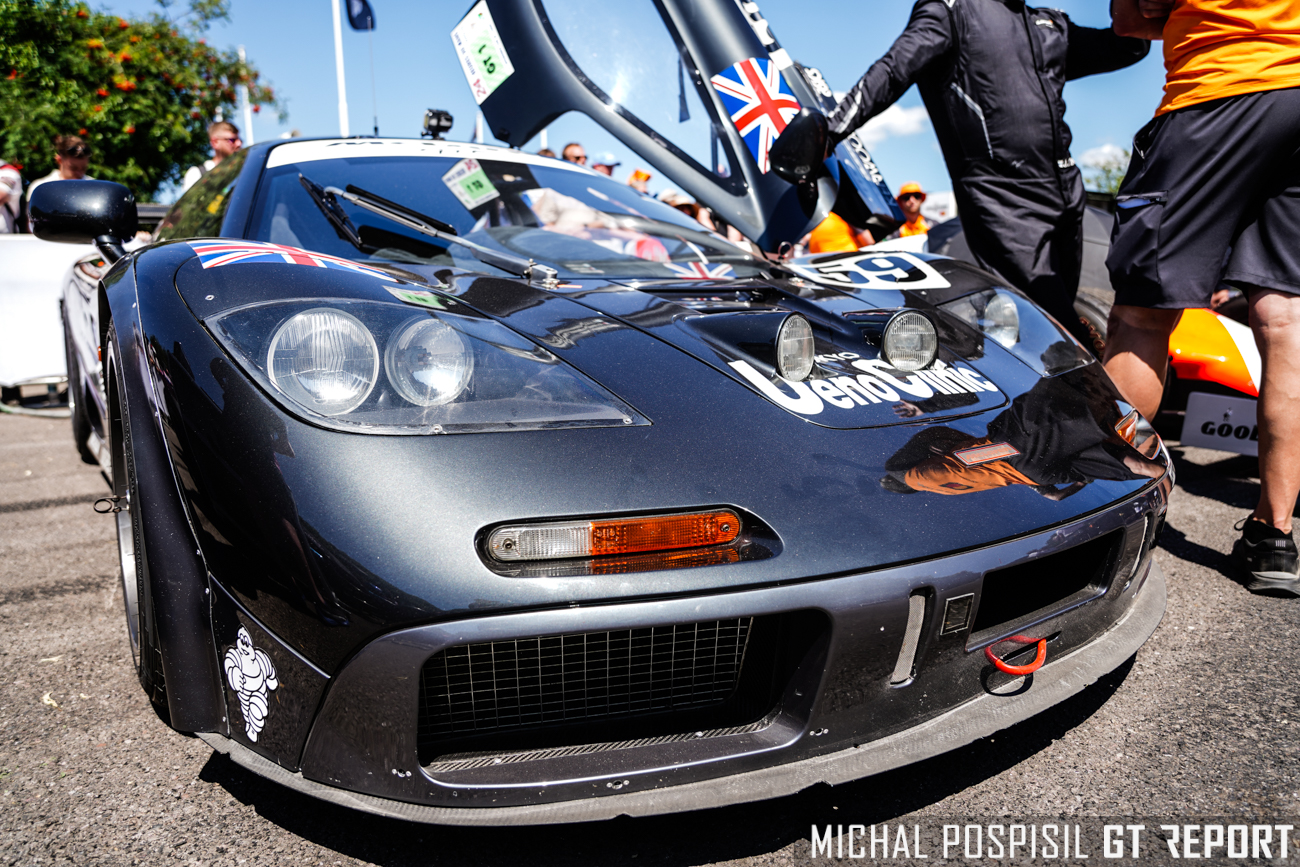
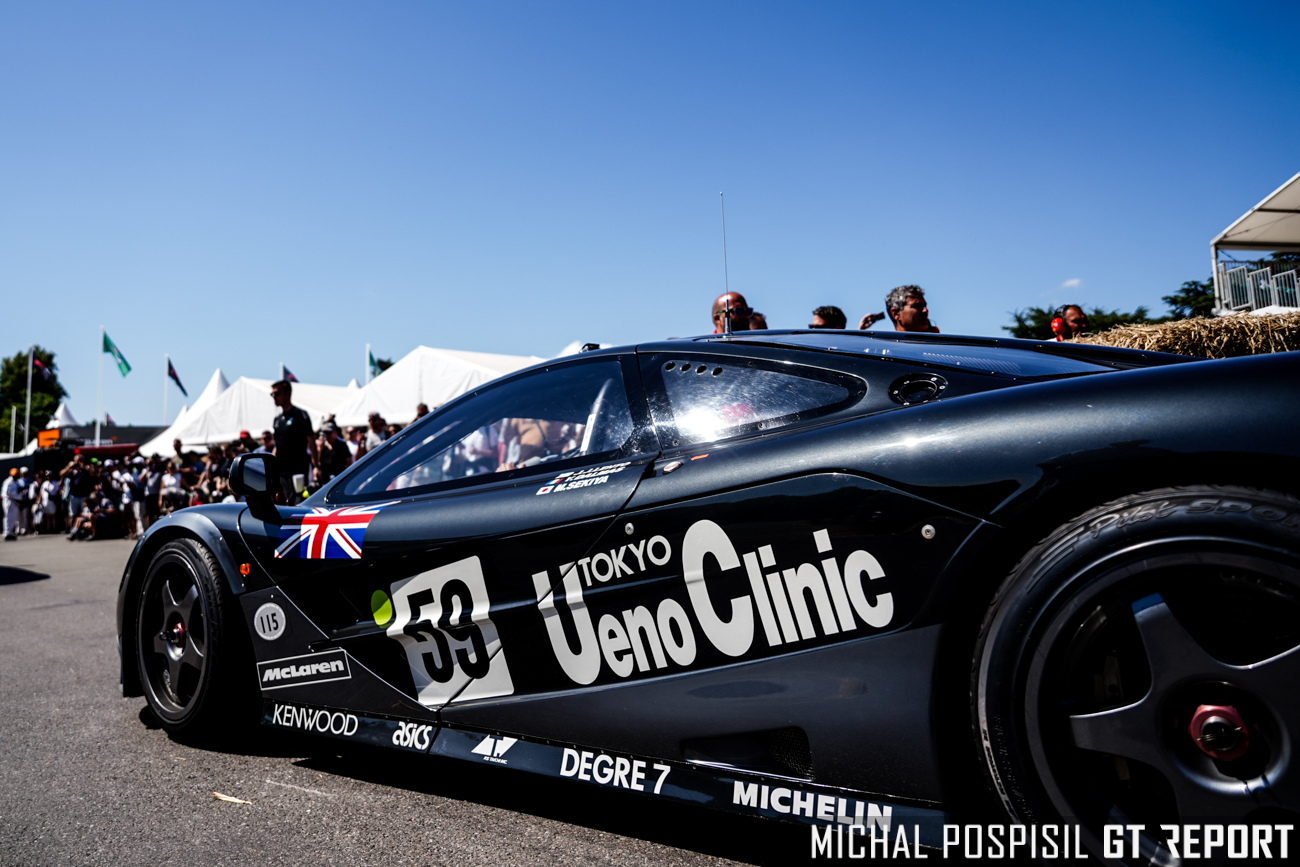
Let’s go back three decades and paint the picture of why the story of this particular car is so unique. After its huge success and domination in the BPR Global GT Series, it only made sense to put the car through the ultimate test in the toughest race on the calendar — the famous 24 Hours of Le Mans. Initially, six McLaren GTRs were entered to fight for victory in the GT class, prepared and raced by privateers with big sponsors such as Gulf and Harrods, and big names like Derek Bell, Andy Wallace, Mark Blundell, and Jochen Mass behind the wheel. Then, Japanese businessman Kokusai Kaihatsu stepped in. He saw an opportunity to promote the brand he had ties with — medical company Ueno Clinic (a Japanese men’s health clinic). He approached McLaren with a proposal to buy another GTR which he would then enter into the race at Le Mans purely as a marketing exercise. McLaren agreed to sell him a car, but it was so close to the race that there was simply not enough time to build a new one from scratch. The only option was to use the prototype that had been serving as a test car. Since the idea behind this project wasn’t about being competitive or fighting for victory, but essentially a banner entry, the deal was sealed and Kokusai Kaihatsu got himself a promotional company car.
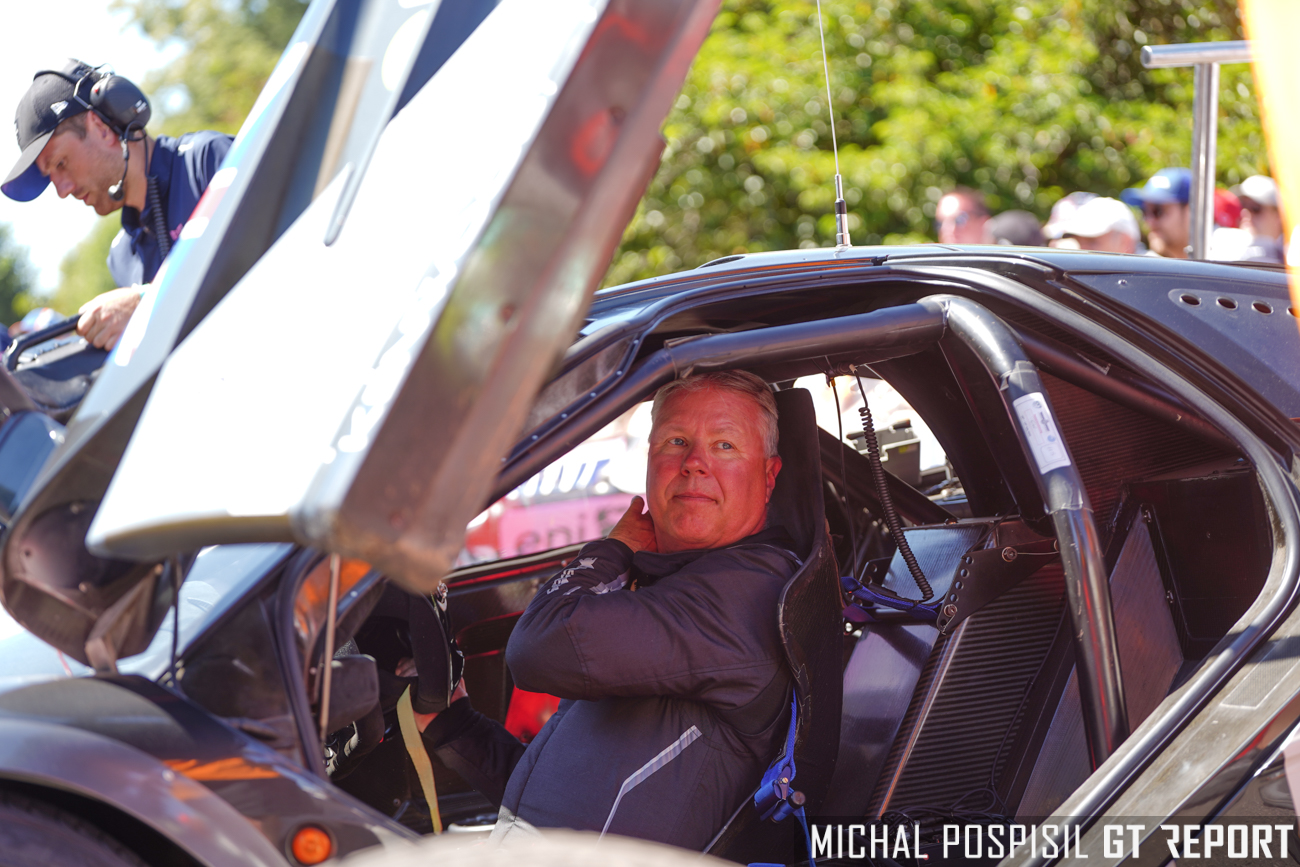
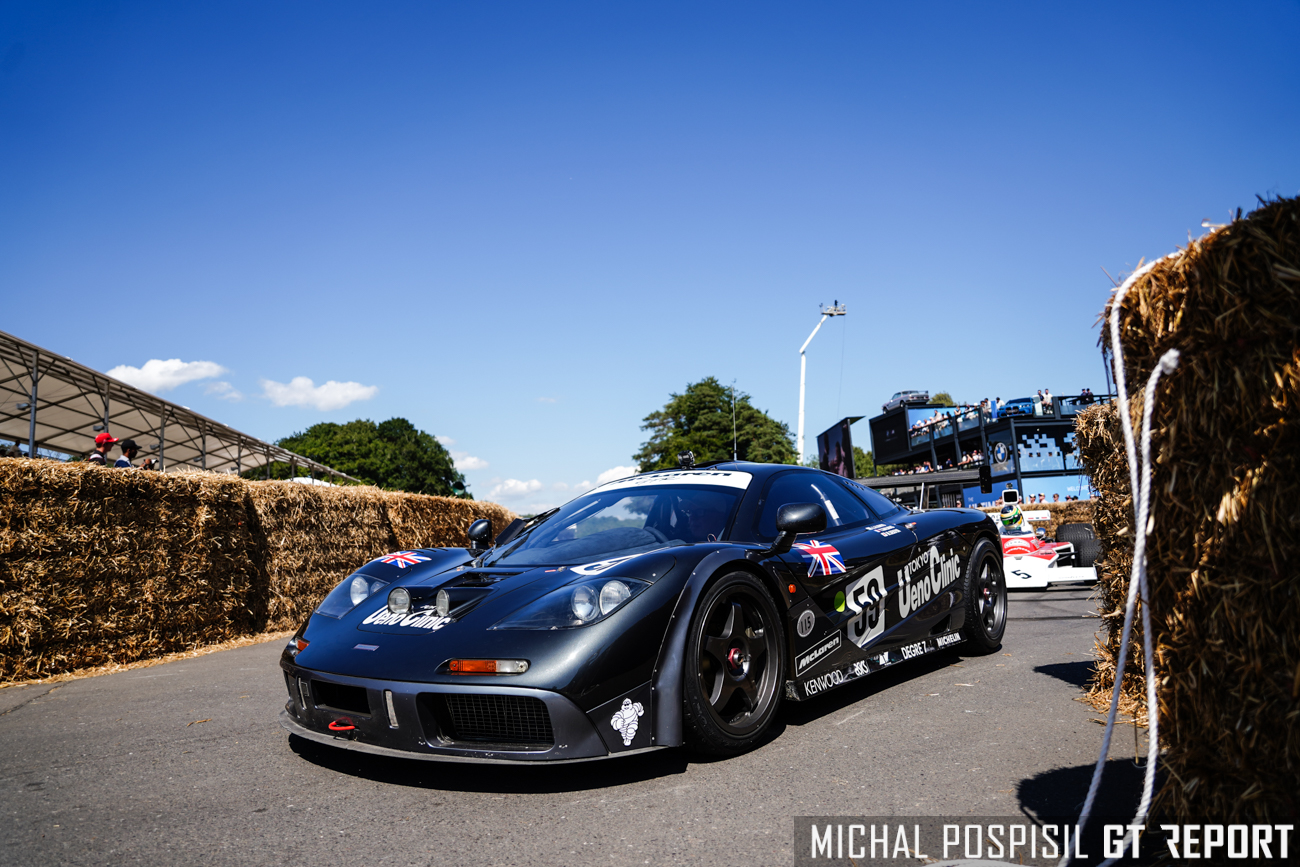
JJ Lehto getting ready for his final run up the hill at Goodwood
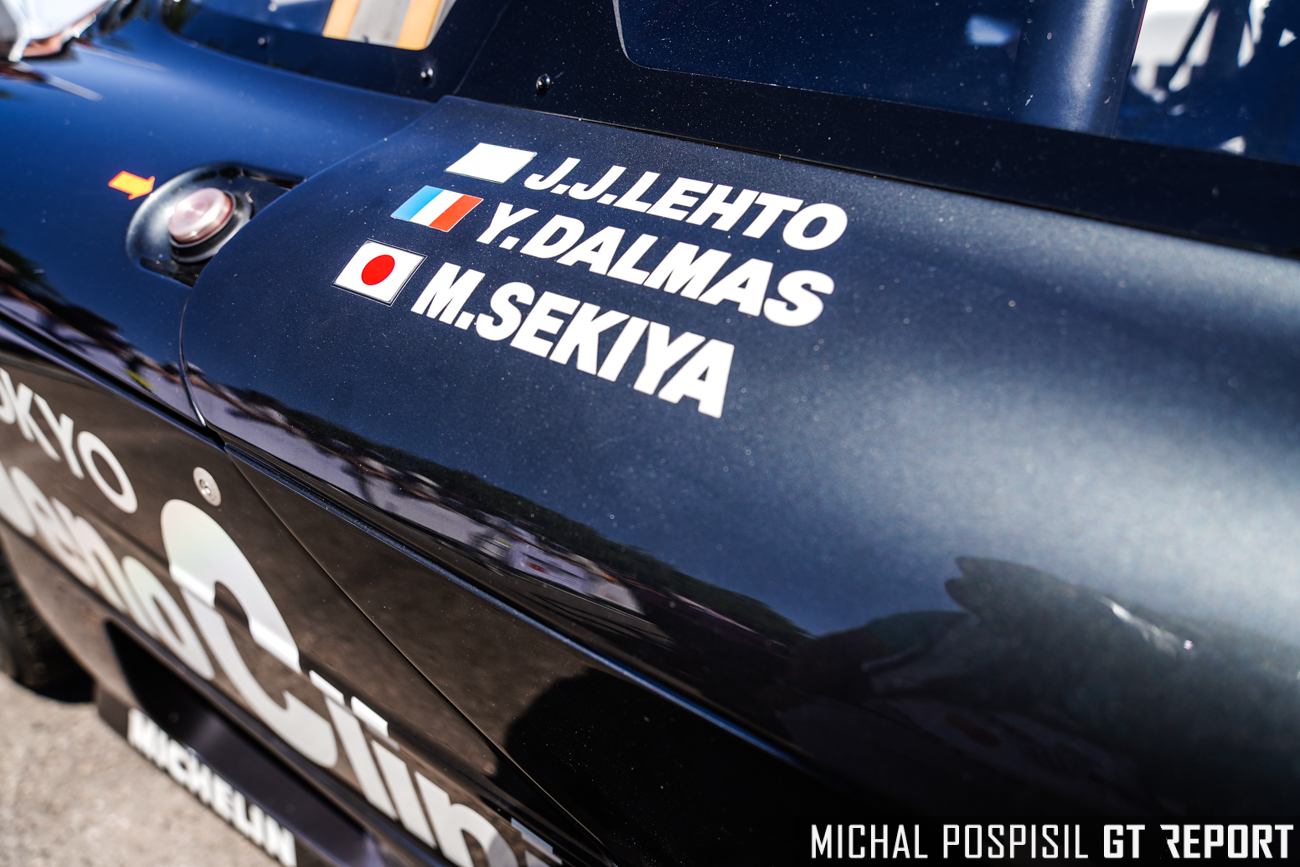
Since Kokusai Kaihatsu didn’t have its own race team, experienced racing outfit Lanzante Motorsport — a small but skilled British team — was hired to run the car at Le Mans. McLaren themselves provided technical assistance, including Gordon Murray and McLaren staff being present during the race. So while the car officially entered under Kokusai Kaihatsu Racing, in reality it was funded by Japan, prepared by Lanzante Motorsport in the UK, and supported by McLaren. The team assembled three drivers at the last minute. From Finland came lead driver JJ Lehto, an ex-F1 racer, incredibly fast and seeking redemption after a stalled career in F1. His raw pace and stamina made him the perfect choice for endurance racing. The team also needed a pair of calm and experienced hands, and French Le Mans veteran Yannick Dalmas was a perfect fit. Finally, due to ties with the title sponsor in Tokyo, Japanese driver Masanori Sekiya was added to the line-up, who was considered a steady and consistent driver, if not widely known internationally.
Nobody expected this privateer team with no previous Le Mans experience, running a car never designed to race, to challenge the giants. The plan was simple: circulate steadily — the plain black car #59 with Ueno Clinic logos — and see how long it would last. To say that Lanzante Motorsport were underdogs would be an understatement. The 1995 field of GTs and prototypes was strong.
All McLaren GTRs qualified, as expected, behind the lighter, purpose-built prototypes. The fastest McLaren — the Gulf Racing car #51 — started 9th; the eventual winner was a little further back in 11th, with the remaining McLarens in 12th, 14th, and 15th overall. The race began as predicted, with the prototypes sprinting away. It looked like a straight fight between them; the Courage C34 of Mario Andretti, Bob Wollek, and Éric Hélary seemed the favourite. Andretti was chasing the last crown missing from his career. Having won the Monaco Grand Prix and the Indy 500, the 24 Hours of Le Mans was the one he needed to complete the elusive Triple Crown.
But the 1995 race was defined by horrific weather. Rain poured through much of the night, turning the track into a treacherous mix of standing water and fog. Many of the faster prototypes, including Courage, Ferrari 333 SPs, and Kremer-Porsche entries, suffered reliability problems, accidents, or simply couldn’t keep pace safely. The McLarens, being based on a road car, were robust and better suited to the conditions. The Ueno Clinic F1 GTR remained remarkably reliable, avoiding serious technical trouble. Its naturally aspirated BMW V12 proved bulletproof, and the Lanzante crew executed clean pit work. We asked JJ what his favourite highlight of the race was.
“I don’t know if it’s a highlight, but it was raining a lot, you know, 18 hours or something like that. And that really helped us, because of course, the prototypes were faster than we were. But we were able to level it out quite a lot during the rain. So that helped us a lot. All I remember is that the car was so nice to drive. And secondly, the engine is so torquey, its throttle response is so good. And the sound you hear inside, you know it’s just something special.”
The BMW V12 is certainly something special. The noise is loud and raw; at least one McLaren F1 GTR appears at the Festival of Speed every year and it’s regarded as one of the best-sounding cars of the event. And if you’re lucky enough to see the engine up close, you realise it’s a work of beauty.
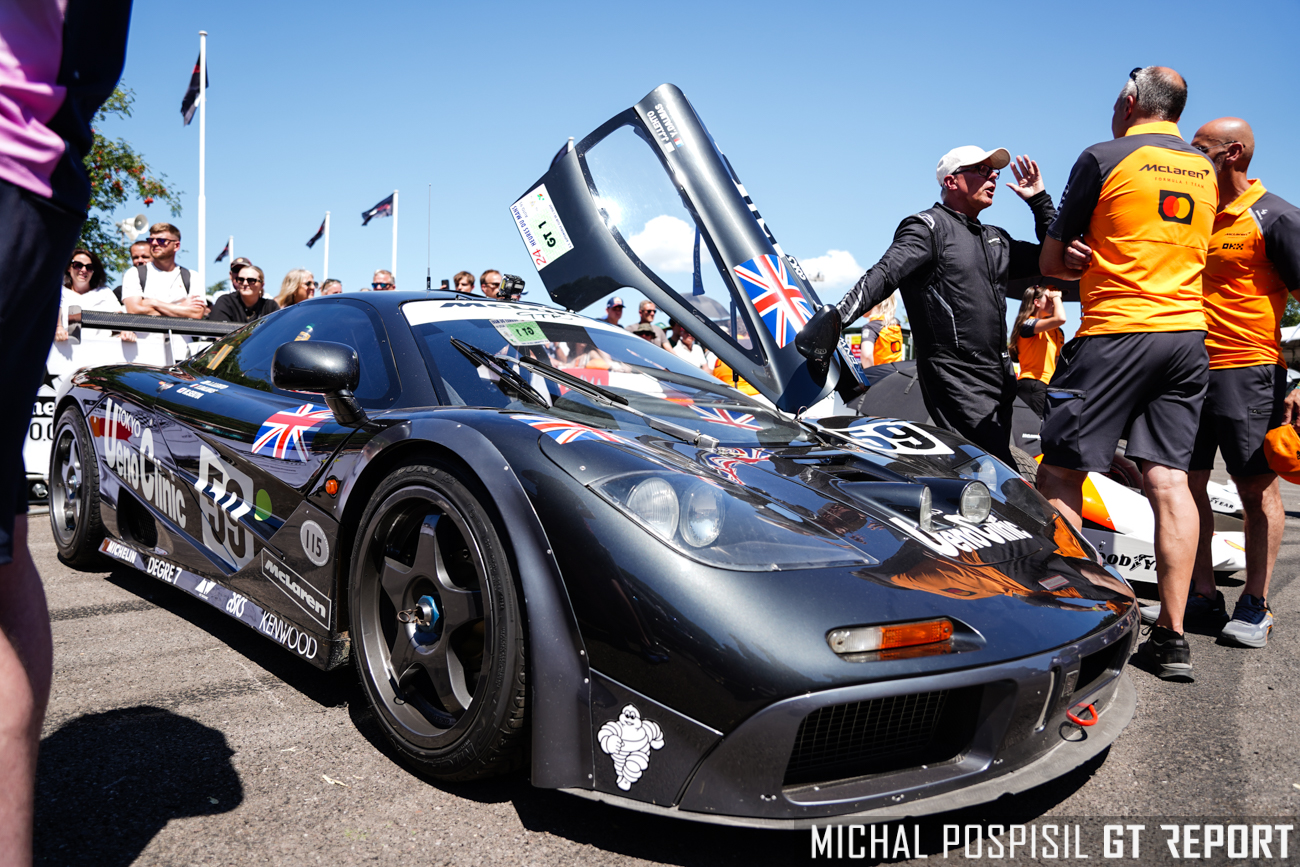
1995 24 Hours of Le Mans winners, McLaren F1 GTR and JJ Lehto
JJ’s famous night shift is still remembered 30 years later as one of the finest in Le Mans history. As darkness settled, Lehto climbed back into the Ueno Clinic McLaren. The track was a mess — standing water, spray, and poor visibility made it nearly impossible to see beyond the headlights. Most drivers eased off to protect their cars, but Lehto did the opposite: he attacked. He trusted the stability of the McLaren F1 GTR, braked late, and used his single-seater reflexes in conditions others dreaded. By 2:00 AM, many prototypes were in trouble — technical issues or accidents — but Lehto kept pounding out relentless stints, never losing focus. In this phase, car #59 emerged as the most consistent machine on the track; lap after lap he was 15–20 seconds faster than rival GT drivers and nearly matched the best prototype times. He clawed into the overall top three. The Flying Finn lived up to his name, and mechanics later said his confidence in the wet kept morale in the garage alive. Slowly, they began to believe outright victory was possible.
JJ remembers: “I could really play with the torque because with some engines, you feel that it’s sort of lacking torque and you start to lose it a little bit, then you have to downshift it too much. But with this one, you can wait, and, you know the torque is there, even if you don’t feel it. So with the gearing always, you have to find a way to handle the engine. And I think that that was a big help for us in the rain as well, because the engine was really smooth to drive, and you could really use that torque. It wasn’t aggressive, so with the gearing more in the range that was nice.”
Judging by the light smile on JJ’s face, the engine clearly made a big impression, and he loved playing with it. That’s the sign of a seriously talented racing driver: not only steering the car with the wheel, but with the throttle pedal as well. Combined with immense focus and a cool Finnish head, Lehto stood above the rest in truly treacherous conditions.
By Sunday morning, car #59 had moved into the overall lead, thanks largely to JJ Lehto’s night stints. But the final hours were not easy. The Courage C34 (#13), despite earlier setbacks, was still charging hard in second. Bob Wollek and Mario Andretti delivered ferocious stints in the dry morning conditions, often faster than the McLaren. Around noon, the track dried, giving the prototypes their speed advantage back — but it was too late; they had lost too much time overnight. Lehto and Dalmas managed the pace, keeping the gap safe. Sekiya drove the final stint, a steady hand to the finish, and at 4:00 PM, after 298 laps, car #59 crossed the line first. The Courage prototype #13 finished second — the closest Mario Andretti ever came to completing the Triple Crown. Three other surviving McLarens finished 3rd, 4th, and 5th, further proving the car’s depth. The victory made JJ Lehto, Yannick Dalmas, and Masanori Sekiya Le Mans legends. Sekiya became the first Japanese driver to win overall, while Dalmas claimed his second of what would become four wins. For Lehto, it was the crowning achievement of his endurance career. For McLaren, it was an incredible result — winning Le Mans on debut with what was fundamentally a modified road car. It cemented the F1’s reputation as one of the greatest supercars ever built, and the black Ueno Clinic McLaren remains one of the most iconic winners in Le Mans history.
JJ has driven many cars in his long endurance career, and given the circumstances we asked him, rather cheekily, how highly he rates the GTR on his list of favourites — expecting that the car which took him to the first of his two Le Mans wins would probably be his favourite.
“Well, you know, every car is different. I really don’t have a favourite car. It’s just that every season, every car is always different. You just have to try to make the best out of it. I love them all. As long as you can drive them, of course they are all the best,” he finished, with a laugh. After all, most of the cars he has driven are probably present somewhere in the vast paddock at Goodwood — and drivers like to keep fond memories of them all.
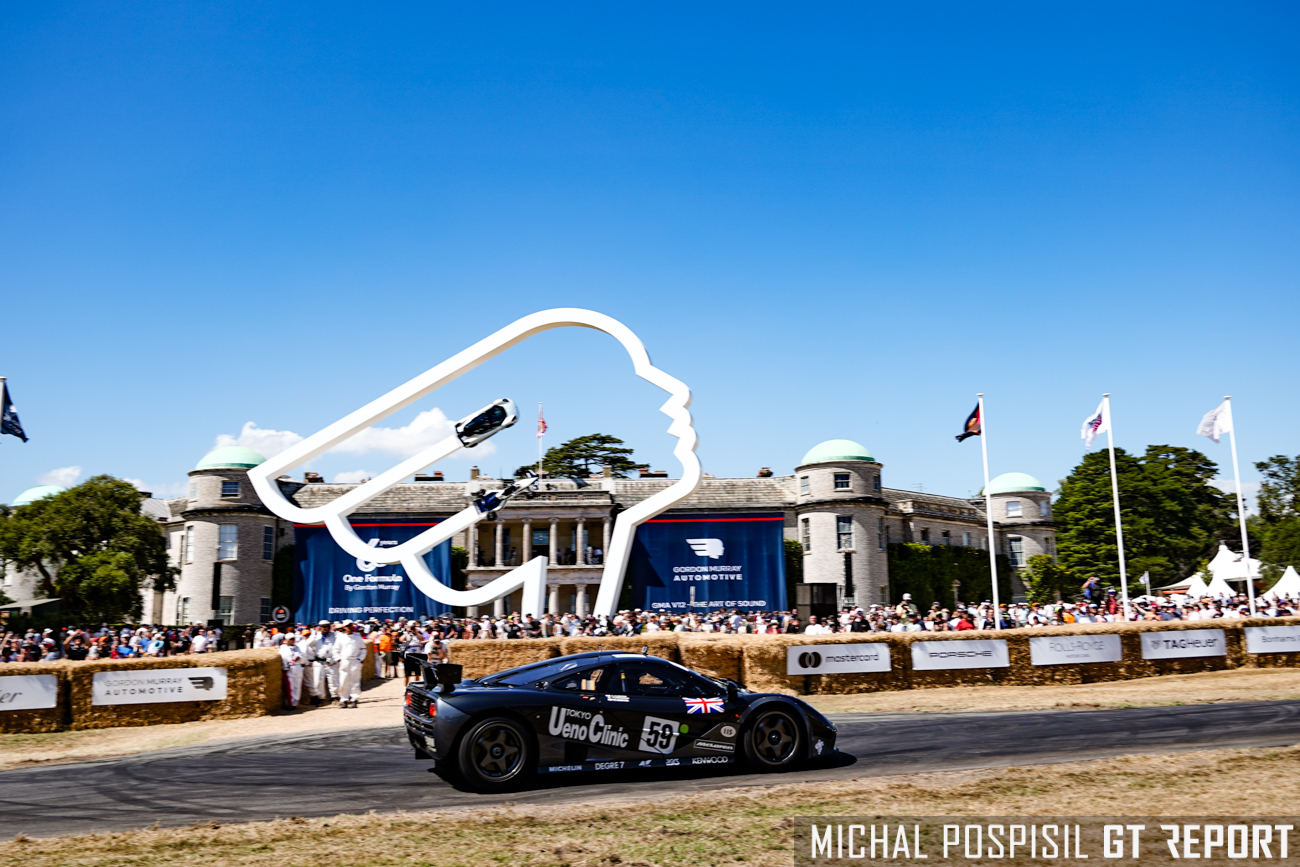
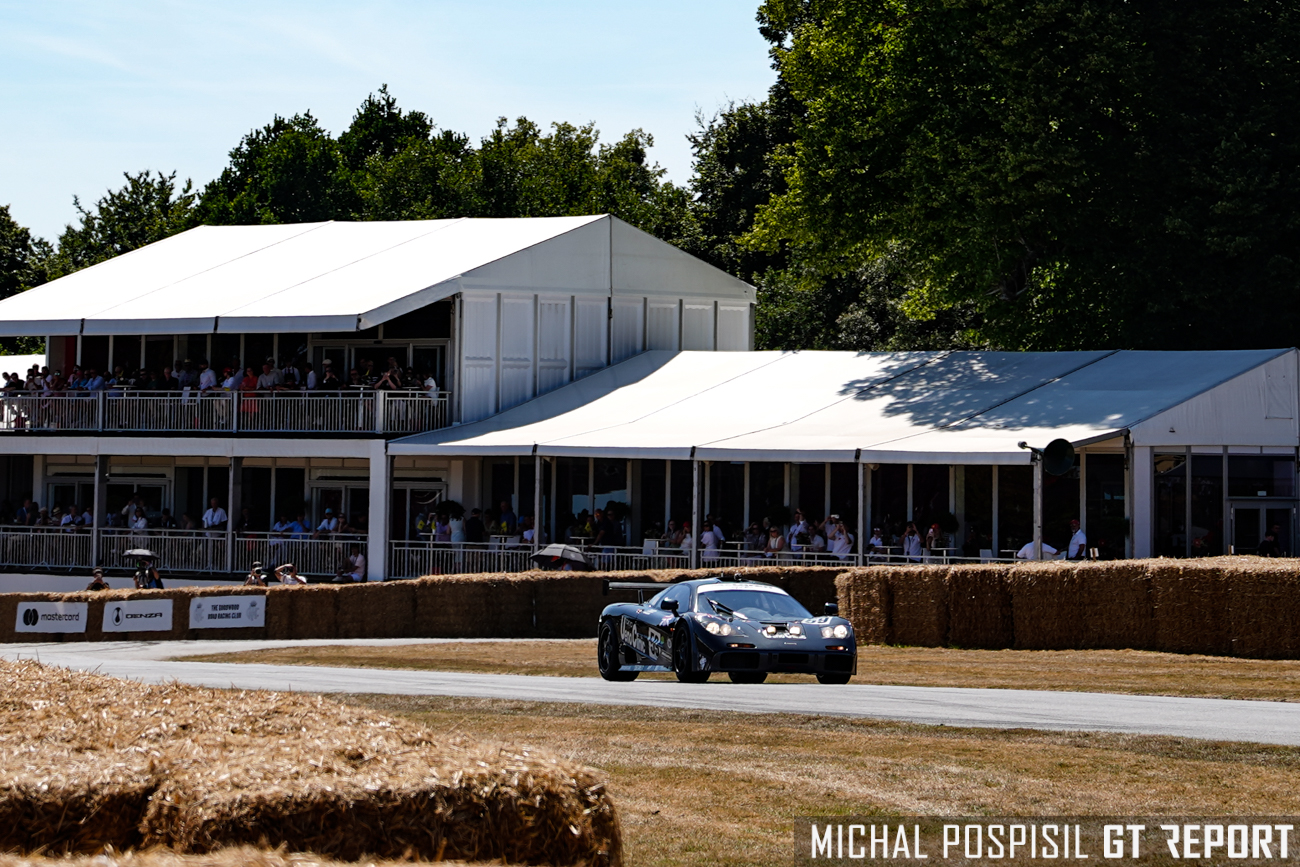
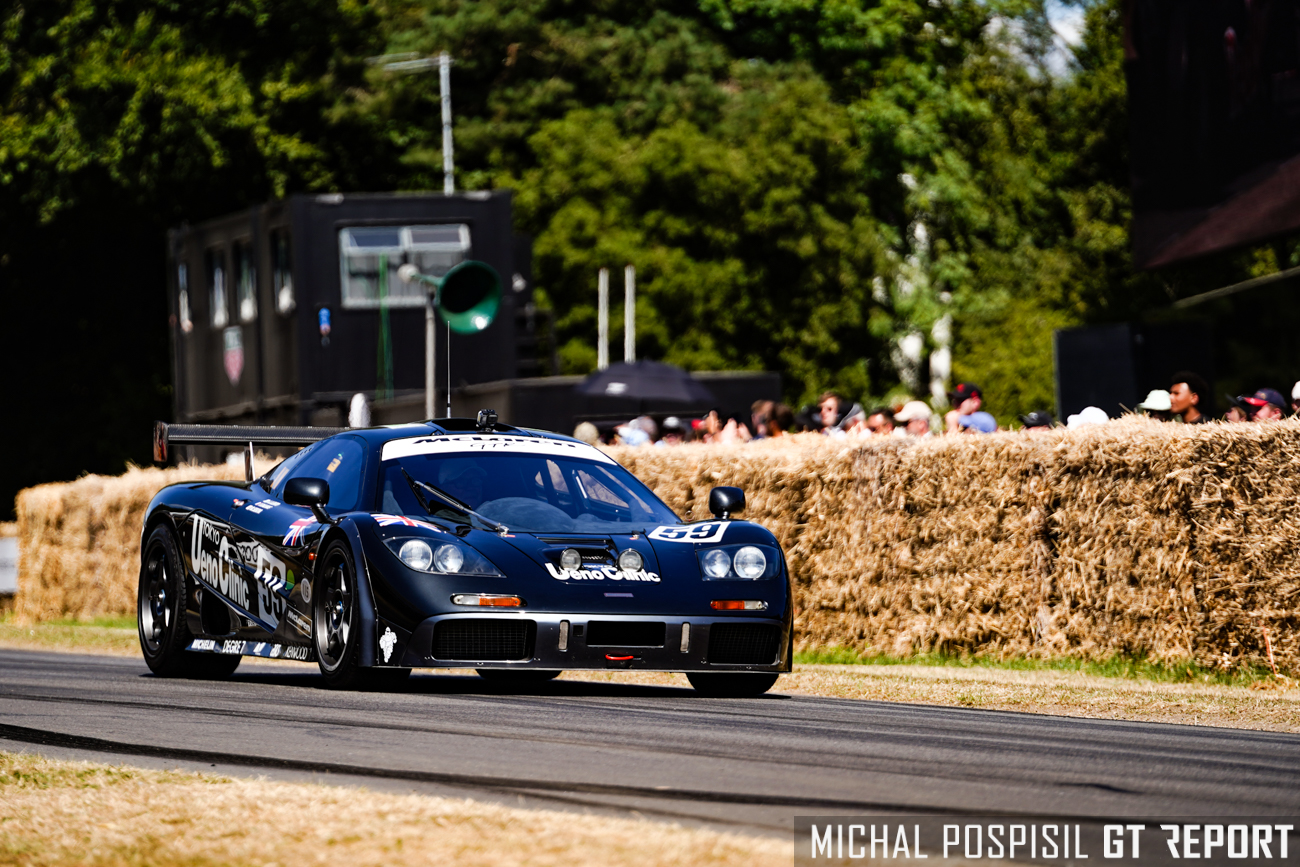
McLaren F1 GTR #59 going up the hill at Goodwood Festival of Speed 2025
A Fitting End
And how did JJ enjoy his weekend at Goodwood? “We have been lucky with the weather, It’s been sunny and warm, no rain at all. It’s been a tough four days, but it was all worth it,” he replied, as our interview was interrupted by the engine of the Alpine F1 car standing right next to us — also the signal for drivers to get ready for their last run up the hill. We thanked JJ and the McLaren team for the interview and headed over to the track opposite Goodwood House to watch the car whizz by for the last time, its special 6‑litre V12 screaming like a siren. What a sight! Then, after the finish line, JJ gently brought the car back down the hill and into the paddock for the last time this weekend, giving fans a final chance to snap a few more photos.
Big thanks to McLaren and Goodwood for organising such a reunion. Here’s to seeing them in action again soon.
Another epic Goodwood Festival of Speed comes to an end. Surely we will be back next year. See you there.
Photos by Michal Pospisil.