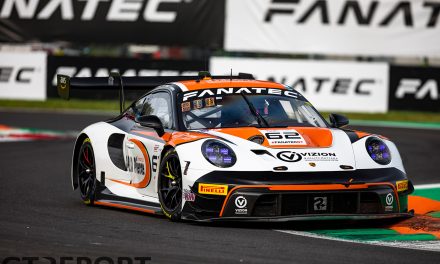
The Spa 24 Hours of 2026 will be a durability test for man and machine. That is usually the case with a race twice around the clock, but with temperatures rising to fourty degrees, it will be more than a survival race – also for the brake systems in the cars.
Brake supplier Brembo is busy keeping all customers happy during the weekend of the endurance race. With fifty years of experience in motorsports, the Italian manufacturer knows exactly how to deal with insanely hot race weekends.
“We have two main braking points,” Brembo engineer Maurizio Assi tells GT REPORT in an interview ahead of the Spa 24H. “The end of Kemmel straight: it’s very high energy and very high torque. Then the second point: Bus Stop. The last chicane – very high torque and extremely high temperature.”
Cars arrive with very high speeds and need to brake to under one hunderd kilometers an hour, requiring a lot of energy and power to slow the car down. The brakes reach temperatures of about 350 degrees to 700-800 degrees under braking at the end of the Kemmel Straight, Assi explains. “During the race, our customers check the temperatures and if they are able to reach the end of the race without changing the brake system.”
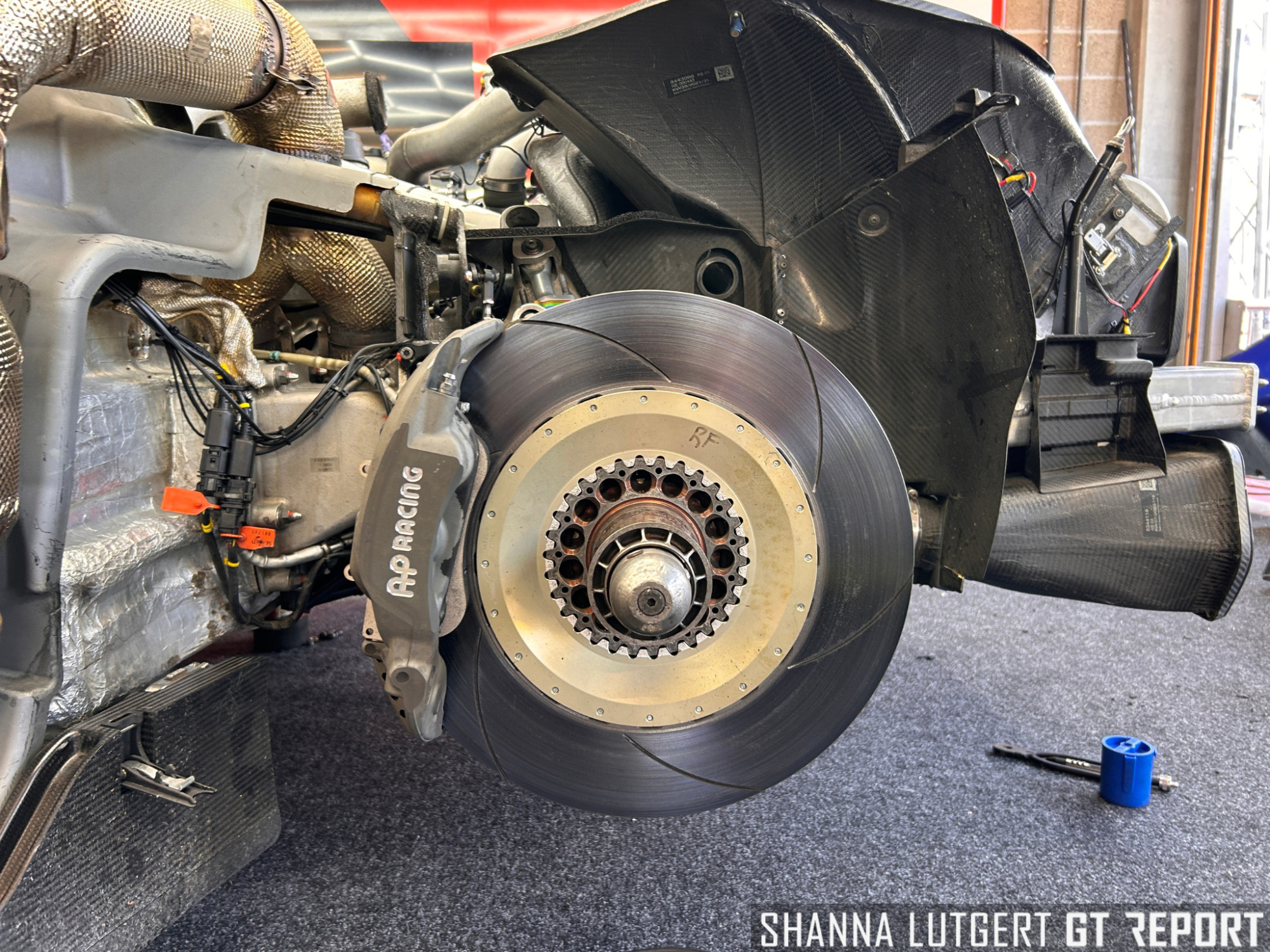
Paradine Competition’s BMWs run with an AP Racing brake caliper and Brembo pads
“If you run for two, three, four thousand kilometers, the performance reduces a little bit, of course. In recent years, we have a technical pit stop, in which 99 percent of our customers change the brake system. They have five minutes and are able to change the brake system easily, and then they have hunderd percent performance again.”
How important the tyres are for Brembo’s brake systems
Brembo has a large variety of customers. From the front to the back of the paddock, you’ll see Ferrari, Mercedes, BMW, McLaren, and Ford all with Brembo brake systems. Taking a peek in the HRT garage in the F1 pit lane, and you’ll likely see the brake assembly when the cars are ‘resting’ ahead of the sessions.
The GT3 cars differ internally, which is connected to the weight distribution. Mid-engine and front-engine cars have a different balance, which might require a different brake setup. “For us, it doesn’t really matter what car it is or what balance it is,” Assi explains. “Of course, Ferrari and Ford are very different. The brake systems are different, but we use the same materials.”
The performance of the brake system is also linked to tyre wear. With the heat this weekend, the different GT3 cars experience tyre degradation in a slightly different way too. “When the left leg of the driver pushes the brake pedal, it is mandatory to have the right torque for the tyre grip. Then, if you have new tyres, you can use the brake system at one hundred percent performance,” Assi says.
“These cars, in GT World Challenge, run Pirelli tyres. We have the same cars with the same brake systems in other championships in Japan, Italy, DTM, and so on, with very different tyre manufacturers.” For example, in NLS and during the Nürburgring 24 Hours, teams can choose which tyre they want to run, which is why you’ll see Pirelli, Falken, Dunlop, Yokohama, Michelin among other tyre manufacturers there.

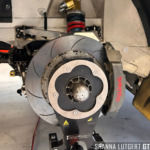
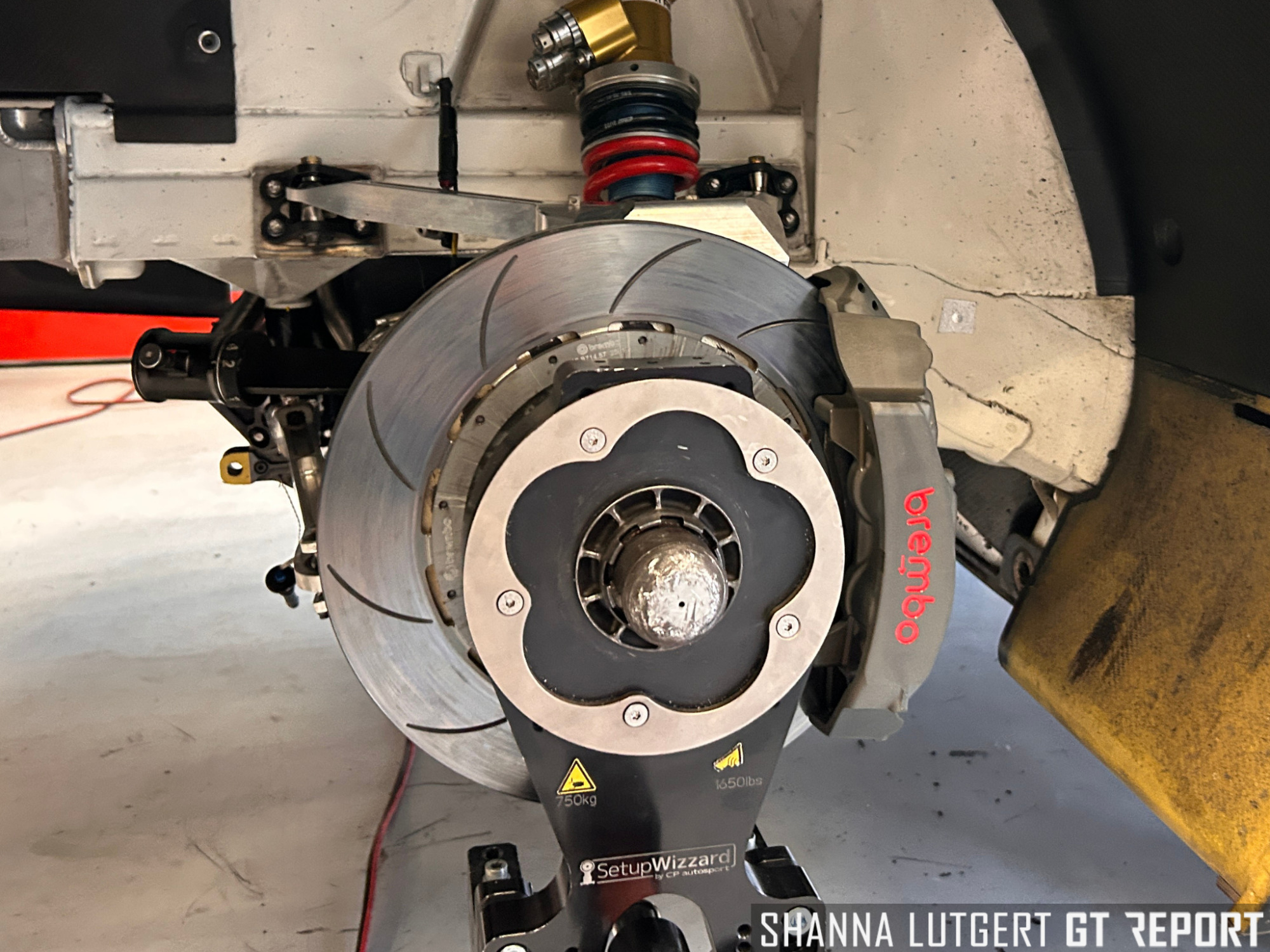
Brembo brake assembly on the #65 Ford Mustang GT3 Evo of HRT
“The customers use the same brake system, but with very different energy. Maybe a difference of ten to twenty percent. The tyres are therefore extremely important to us.”
Transferring data between championships and road cars
Brembo has a lot of data from different championships, cars and tracks ready to help prepare its customers to perfection. The brake supplier also transfers some data from road cars, as GT3 cars are, at the base, heavily modified road cars. “More or less!” Assi smiles. “We transfer a lot of info, but remember: in 24 hours, four to five thousand kilometers, you use your brake system, tyres, car, at the maximum level of power.”
“When you go for a Sunday drive, that’s completely different. In racing, we are focusing on a little part of the performance of everything. During a 24-hour race, you push the brake pedal every time for 90, 95, 100 percent of the maximum level. Our colleagues in the road cars develop and optimise a brake system for all of the required energy and potential.”
“In any case: we transfer a lot. Look at the Ferrari Challenge in the last years we run a CCMR (Carbon Ceramic Material R, ed.) and it’s an excellent material. It’s between CCM, the standard brakes of road cars, and the carbon in Hypercars in Le Mans or Formula 1. We’re transferring a lot of information regarding brake-by-wire, which is mandatory for our standard road cars.”
“We’re studying this and are pushing hard, because we are sure that in the future, all of the cars will run the same or pretty similar brake systems.”
Love what we do? Support GT REPORT with a donation and fuel our next trip to the racetrack.
Even €5 makes a difference!