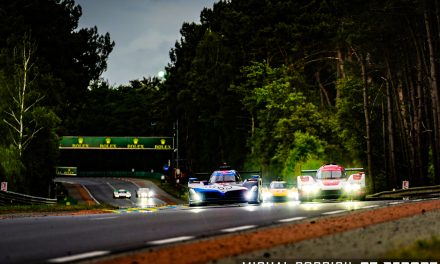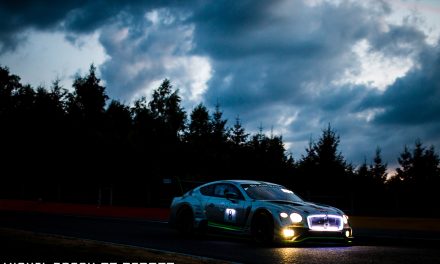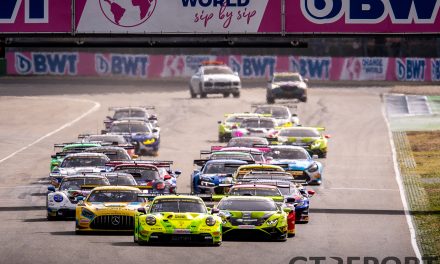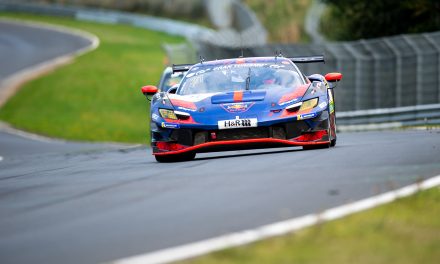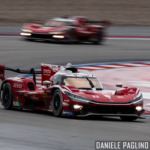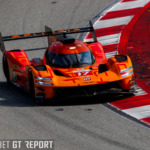

In the diverse world of GT racing, very different cars share the same track, from front-engined V8s to mid-engined flat-sixes and high-revving V10s. Ensuring they can all compete on equal terms is a constant challenge, and that is where Balance of Performance (BoP) comes in. This system adjusts weight, power, aerodynamics and fuel limits to level the field, and it is always evolving.
BoP has been central to GT3’s rise as a global success, producing close and unpredictable racing, but it has also been a frequent source of controversy. Late adjustments, disputed penalties and claims of favouritism are part of the picture, as organisers continually adjust the rules in search of fairness. In GT racing, BoP is never fixed; it changes from race to race, shaped by data, debate and the ongoing pursuit of balance.
What is Balance of Performance?
BoP is used across multiple categories of GT racing, not just GT3. It plays a key role in GT4, GT2, and in the FIA World Endurance Championship as well as in various national-level series. These categories feature cars with wide differences in performance and cost, and BoP ensures that each model can compete on relatively equal footing regardless of its baseline design.
The process begins with homologation. Before a car can be balanced against its rivals, the manufacturer must submit a complete technical specification to the governing body. This includes the engine type and configuration, displacement, body shape, aerodynamic elements, suspension design, gearbox, and other core components. Once homologated, that specification is locked and applies to every example of the model racing in the category. This fixed baseline is what BoP adjustments are built on. Without homologation, BoP would be impossible, as there would be no consistent reference for performance.
Once cars are homologated, organisers need a benchmark to set the season’s baseline. For GT3, this comes during the official Balance of Performance tests held at Paul Ricard. Every manufacturer runs its cars under controlled conditions with independent logging equipment, giving series organisers the comparative data they need to issue the initial BoP tables. Those figures form the starting point for the season, later refined with real-world race and practice data.
Weight changes through ballast

Extra weight is sometimes added to faster cars to slow them down slightly. Increasing weight affects more than just acceleration, it influences how the car handles under braking, its agility in corners, and overall tyre wear. A car with more ballast will typically be harder on its brakes and tyres over a stint. Teams must adapt their suspension setup, ride height, and balance to handle the weight distribution changes, which might also affect how the car behaves during fast direction changes.
Engine restrictions: air and boost limits
To prevent more powerful engines from dominating, BoP regulates how much air an engine can use and how it delivers power. Turbocharged cars have boost pressure curves defined in the BoP tables, while naturally aspirated engines may receive maximum rev limits. Both are closely monitored through the car’s ECU and mandatory data loggers. The approved ECU software also fixes throttle response and air-fuel mixture, preventing teams from altering drivability or efficiency outside the allowed settings. These measures equalise peak output without forcing manufacturers to redesign their engines.
Aerodynamic tweaks to manage grip and speed
BoP can limit aerodynamic performance through regulations on rear wing angle, ride height, splitter size, diffuser configuration, and homologated bodywork. More downforce improves grip in corners but creates drag, which slows the car on straights. Teams work within allowed parameters to find the best compromise. Series organisers often use wind tunnel data and CFD simulations to verify aero performance, and post-race scrutineering includes checks on ride height and wing settings.

Fuel capacity to control strategy
BoP can modify how much fuel a car is allowed to carry by adjusting fuel tank capacity or fuel restrictor size. A smaller tank forces more frequent pit stops, while a larger one allows for longer stints. Fuel flow rate, how fast fuel can be added during pit stops, may also be regulated. These factors affect strategy heavily in endurance racing, influencing when and how often a team can pit, and what kind of pace they can maintain across a stint.
The FIA’s role in BoP
In top-level series like the FIA World Endurance Championship, BoP rules are created by the FIA and the ACO. A method introduced in 2024 looks at both the fastest lap times and average pace over a longer run, aiming to reward consistency as well as outright speed.
Even in series run by other organisations, like the SRO’s GT World Challenge or the Nürburgring Langstrecken-Serie, FIA rules and car homologation still shape how BoP is applied. These organisations often work closely with manufacturers to keep things fair.
How Balance of Performance is controlled
Homologation underpins Balance of Performance. Before racing, manufacturers must submit each car to approval by the FIA, locking in its key specifications such as engine layout, aerodynamics, suspension, gearbox, and electronics. This ensures that a given model is identical across championships, whether it runs at in GT World Challenge, IMSA, Nürburgring Langstrecken-Serie, or elsewhere.

From that baseline, organisers enforce Balance of Performance with independent monitoring systems. The FIA and ACO in WEC use torque sensors and stint-energy limits; SRO equips cars with extended dataloggers; IMSA applies its Bosch Scrutineering System to track boost, fuel flow, and mapping. Data is gathered directly by the sanctioning body, not by teams or manufacturers, to prevent manipulation.
Compliance is checked again during the race weekend by Scrutineering. Officials measure weight, restrictors, boost, wing settings, (engine) seals, and ride height, while fuel is sampled through standard connectors and ECU maps are compared to approved versions. Even minor deviations can trigger grid penalties or disqualification.
Together, homologation fixes the design, while BoP and scrutineering hold teams to the balance.
Why BoP matters

Technical variety
Thanks to BoP, GT racing features cars with very different engines and designs competing side by side. This makes the racing more interesting for fans and more attractive for manufacturers.
Cost control
By reducing the pressure to chase small technical gains at great expense, BoP helps teams and manufacturers focus on driving and racecraft instead of costly upgrades. This keeps racing more accessible and sustainable.
Close racing
BoP makes sure races are won by the best team on the day, not just the one with the fastest car. This leads to tighter fields and more unpredictable outcomes.

Criticism and controversy
Sandbagging
While Balance of Performance has been key to producing close racing, it has also been one of GT racing’s most debated elements. A frequent accusation is sandbagging, where teams deliberately run below their true pace to secure a more favourable BoP later. At the Nürburgring, this has led ADAC Nordrhein and the DMSB to use dedicated dataloggers and detailed telemetry analysis to detect and deter such tactics, monitoring everything from sector times to aero settings. This same system is also used to make well-informed and fair BoP decisions, ensuring that adjustments are based on objective, verifiable data rather than on perception alone.
Lack of innovation
BoP can also discourage innovation, as any major performance gain from engineering development is likely to be offset by regulatory changes.
Late adjustments
The timing of adjustments is another flashpoint, with changes sometimes made during race weekends, altering the competitive order at short notice and forcing teams to adapt strategy and car setups on the fly. Such mid-event changes can be particularly disruptive in endurance racing, where car setup, tyre choice, and fuel strategy are planned well in advance.
Politics
Political lobbying is another point of contention, with well-resourced manufacturers able to commit staff and resources to influencing decisions in ways that smaller, non-OEM-backed manufacturers or individual teams cannot match. This can create the perception of an uneven playing field, regardless of whether the BoP data supports it. Tensions rise further when a major event sponsor also fields cars in the race and those entries receive a perceived BoP advantage, leading to suspicion that commercial and sporting interests may not be fully separate. In such cases, the debate around BoP shifts from technical fairness to questions of governance and trust in the system.

Minor infractions: Small tweaks, big consequences
BoP doesn’t just cover major changes. Something as small as applying tape to a car’s bodywork to improve airflow can lead to penalties if it affects performance in ways not approved. Tape, alternative fasteners, or minor changes to cooling vents may seem harmless but can influence aerodynamic efficiency, cooling balance, or airflow under the car. These minor modifications, whether intentional or accidental, are taken seriously.
BoP in action: Real-world examples
2016 Spa 24 Hours
All six Mercedes-AMG GT3 cars were penalised for using ignition settings that didn’t match what they had shown in testing. They lost their Super Pole times and served stop-and-hold penalties in the race. Mercedes-AMG disagreed with the ruling, saying they interpreted the rules fairly.

2018 Bathurst 12 Hour
The 2018 edition at Mount Panorama showcased how well-judged BoP can produce a genuinely multi-brand contest. GT3 machinery from Audi, Mercedes-AMG, Porsche, BMW, McLaren, and Bentley all ran at or near the front during the race, with lap times so closely matched that position changes came down to traffic management, pit stop timing, and driver performance rather than outright speed. Despite the vastly different engine layouts and configurations, the top three at the red flag finish represented three manufacturers, all still on the lead lap after 12 hours of racing. For much of the event, the lead battle included at least four brands in the top five, a testament to BoP’s role in keeping the pace window tight and ensuring the race remained unpredictable until the final minutes.
2021 Nürburgring 24 Hours
Ongoing BoP changes altered performance across brands. Porsche got a performance cut, while BMW benefited from lighter weight and more power. These tweaks directly influenced race results.
2022 Spa 24 Hours
The #6 K-PAX Lamborghini was sent to the back of the grid after officials found a difference between the car’s race setup and what it had used in BoP testing: engine parameters were not in line with the Balance of Performance test and the air filters used were different from the ones used by Lamborghini during the Balance of Performance test

What teams can still control within BoP
Despite the restrictions, teams still have areas where they can optimise their setup. Suspension geometry, spring rates, damper settings, tyre pressures and in some series even tyre manufacturers and compounds, brake balance, and anti-roll bars are all typically adjustable. Even gear ratios can sometimes be selected from a homologated set. Teams can also manage engine cooling with duct configurations, use allowable ECU software maps, and fine-tune driver controls and cockpit layout to suit different circuits or weather conditions.
Balancing fairness and freedom
Balance of Performance is always evolving. It mixes hard data with expert judgement. While it keeps racing fair, it can also lead to debate. Teams push the limits, and race officials have to interpret intent as well as performance.
The FIA sets the framework, and organisers like SRO apply it on a race-by-race basis. When done right, BoP creates some of the best racing around. It is tight, tactical, and unpredictable. The 2016 Spa case shows how even honest disagreements over the rules can stir controversy.
Still, BoP is what makes GT racing what it is: diverse, competitive, and thrilling to the final lap.

New to GT racing?
Want to understand how Balance of Performance fits into the bigger picture? Check out our other explainers on topics like the DTM, the specifics of 24-hour races, and the differences between GT1, GT2, GT3 and GT4. Browse all explainers here and get up to speed.