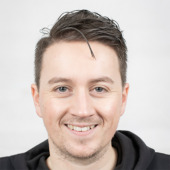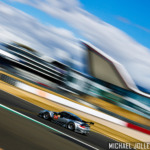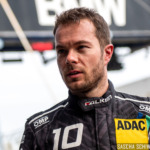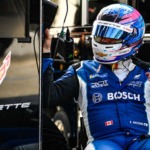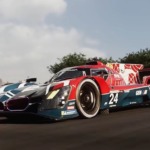
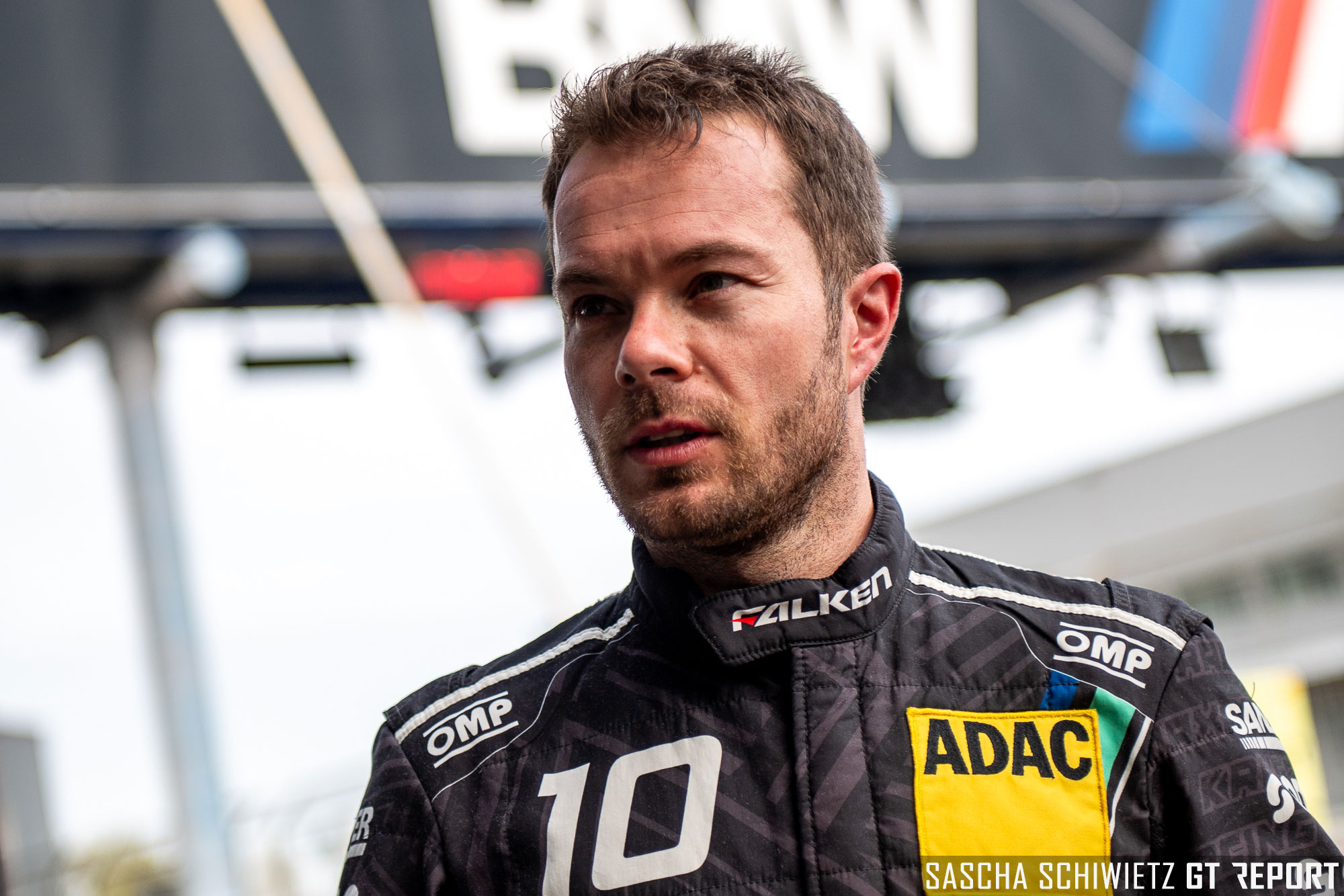
Benjamin Leuchter and Max Kruse Racing are quietly demonstrating how alternative fuel could help secure the future of combustion-engine motorsport at the Nürburgring. By running Audi R8 LMS GT3 cars on an E20 racing fuel in the Nürburgring Langstrecken-Serie (NLS) and the 24 Hours of the Nürburgring, the German team is proving that more renewable components do not necessarily require new engines, major technical modifications or compromises in performance.
There is no radical new powertrain, no separate prototype category and, outwardly, little to distinguish Max Kruse Racing’s Audi R8 LMS GT3 from the other GT3 cars attacking the Nordschleife. The V10 engine remains unchanged. The fuel goes into the same tank and the car races at the same performance level.
That simplicity is central to Leuchter’s project.
“None,” he tells GT REPORT when asked what technical modifications are required. “The fuel we use is a drop-in fuel. You simply put it in the car and go.
“It is very easy to use, and that is the whole idea behind it.”
From an idea to the racetrack
The origins of the project go back to 2023, when Leuchter began looking at how motorsport could respond to the changing political and environmental discussion surrounding the combustion engine.
“It was basically our own idea,” Leuchter explains. “In 2023, with the political environment and everything that was going on, we felt that motorsport had to become a little more modern.
“I have a very close relationship with Volkswagen and am also connected to a lot of the technical development taking place in the background. I knew that Volkswagen was using a fuel called Blue Gasoline for its workshop and facility vehicles.
“We then started talking to Shell, and that eventually led to the fuel we have been racing with throughout the project.”
The motorsport programme has since developed around an E20 R60 racing fuel produced through cooperation with Volkswagen and Shell. E20 refers to its 20% ethanol content, while R60 denotes the proportion of renewable components used in the fuel.
“It is difficult to explain the exact composition because some of the details are not public,” Leuchter says. “But it contains 20% ethanol and 60% renewable components.
“I would not say it is the perfect fuel yet, but it is the right fuel to begin developing with. Our long-term goal is to have a fuel that is 100% renewable.”
Performance without compromise
Leuchter’s first convincing experience with the fuel came during a back-to-back test in Portugal.
“The difference was very clear,” the German says. “We tested at Portimão in very warm conditions and carried out a back-to-back comparison.
“We first drove the car with standard fuel. We then came into the pits, drained the car, filled it with the renewable fuel and let the engine idle for a couple of minutes before going back out on track.
“You could really feel that the car performed a little better. We did not gain much more horsepower at the maximum peak, but the car was able to maintain its power for longer in warmer conditions. That is also what we are experiencing here at the Nürburgring.”
The fuel has an octane rating of 103, making it suitable for high-performance racing engines. More importantly for Leuchter, it allows Max Kruse Racing to compete without giving up the performance expected from a GT3 car.
“We want to show that alternative fuel can be just as competitive in terms of performance,” he says. “There is no difference, and that is the message we want to get across.”
The fuel has already delivered a milestone. In 2025, Max Kruse Racing won the NLS Light round – a non-GT3 race – with its E20-fuelled Volkswagen Golf GTI Clubsport 24h. It was the first victory for an alternative-fuel car in NLS.
Taking alternative fuel into GT3
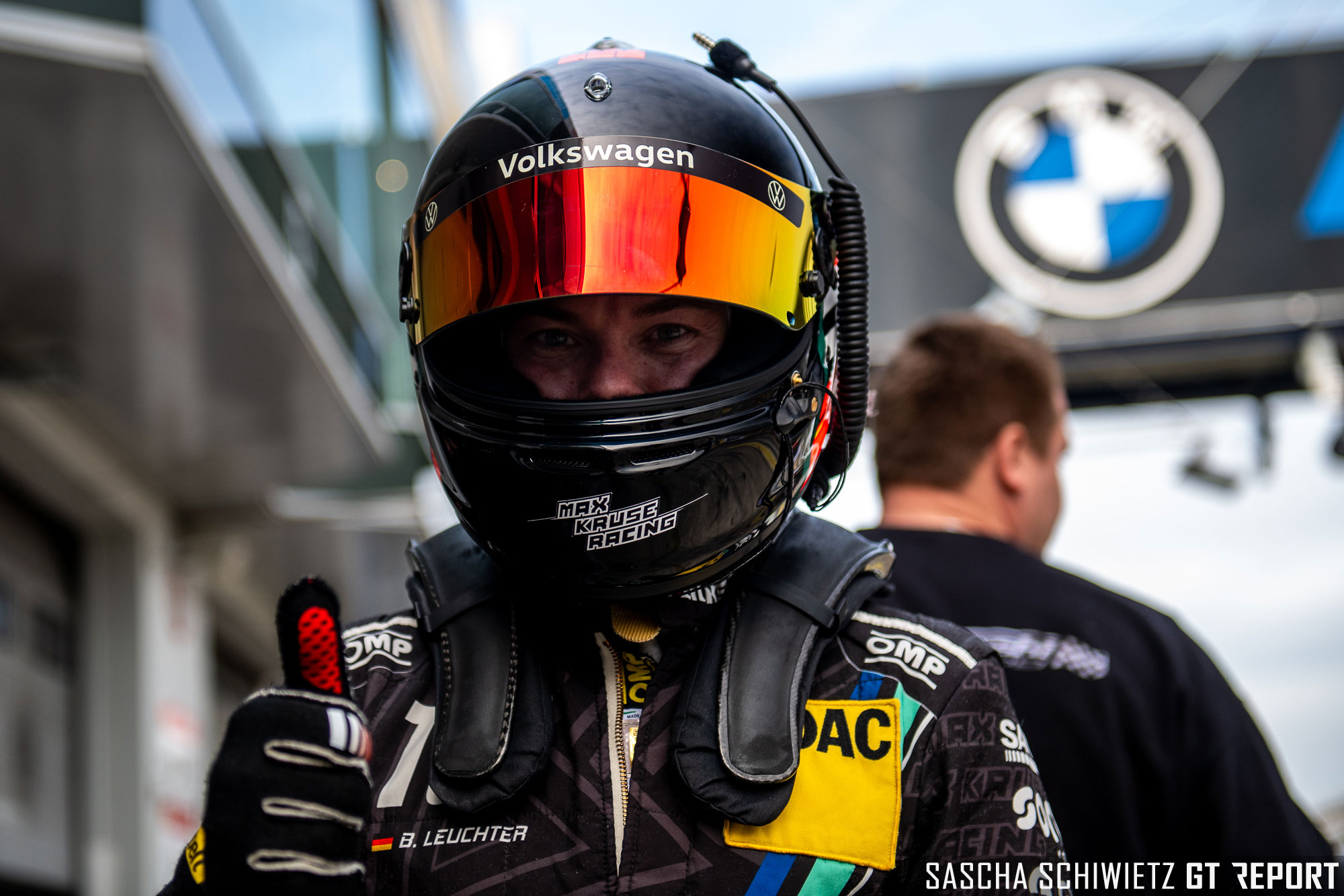
Max Kruse Racing began in TCR before expanding into Porsche Cup and GT4 machinery. The ambitious move into GT3 placed the team among the fastest cars on the Nordschleife and allowed the fuel to be tested in Audi’s naturally aspirated, mid-engined V10 race car.
“As a team, we always want to develop and take the next step,” Leuchter continues. “We started in TCR before moving into Porsche Cup cars and Porsche GT4. GT3 was always our long-term goal.
“We want to compete against the best and fight at the front, and that is what we are now doing here on the Nordschleife.
“Together with our partners and the alternative fuel, I think we have a very good combination to demonstrate that alternative fuel is not at a disadvantage compared with standard fuel.”
The team’s first GT3 appearance in 2025 was supported by Land-Motorsport, one of the Nürburgring’s most experienced and successful teams. The cooperation allowed Max Kruse Racing to learn the car before bringing the operation fully in-house.
“GT3 was a new category for us when we entered our first race, so we wanted to work with a very experienced team,” Leuchter explains.
“We found that experience in Land-Motorsport. They are very professional, very friendly people, and they have also been friends of ours for a long time.

“We contested our first race together. They helped us understand how the car worked and showed us how everything needed to be done. Since then, we have handled everything ourselves.”
The decision to race Audi machinery was a natural one. Leuchter has a long-standing relationship with Volkswagen as a racing, test and development driver, while Max Kruse Racing is closely involved with the manufacturer’s Nürburgring competition programmes.
“We have a manufacturer contract with Volkswagen, and we run the Volkswagen Golf project here at the Nürburgring,” he says.
“Those cars are factory entries, and we developed the project together with Volkswagen. That means we will remain connected to the Volkswagen Group, which is also why we chose Audi for the GT3 programme.
“For the future, of course, we are open to speaking with other manufacturers. Those conversations are already taking place, so it is an ongoing process.”
Growing Max Kruse Racing

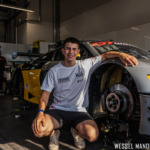
Max Kruse Racing was established in 2018 after Leuchter invited then-professional footballer Max Kruse to an NLS race. What began with a single Volkswagen Golf GTI TCR has developed into a multi-car operation competing with touring cars, GT4s and Audi GT3 machinery.
“We met when Max was playing football for VfL Wolfsburg,” Leuchter recalls. “I invited him to an NLS race while I was competing here for another team.
“He came to the Nürburgring and said, ‘Wow, it would be nice to drive here one day.’
“I told him, ‘Well, let’s do it. Why not? It is possible.’
“We started with one car in 2018. Today, we have five cars. Max is also racing himself, and he has now completed his second Nürburgring 24 Hours. It has been really nice to see how everything has developed.”
Despite the team’s name, Max Kruse Racing is not solely owned by the former Germany international. Kruse and Leuchter are equal shareholders, with Leuchter overseeing much of the sporting and technical operation.
“It is a funny combination, but Max is also a very good friend,” Leuchter says.“ When we started, we never planned for Max Kruse Racing to become the business it is today. It simply developed in its own way.

“The success came, we added more cars and more customer drivers joined us. It has been a very interesting journey.”
The partnership is built on a high level of trust. Kruse leaves the motorsport decisions largely to Leuchter, who jokes that some conversations begin only after another car has already been bought.
“Sometimes I simply call him and say, ‘Okay, Max, I have just bought another car.’
“He might respond, ‘Oh, wow, okay. You understand this better than I do, and I trust that you are making the right decision.’
“He trusts me completely, and the trust goes both ways. We have never had an argument or any serious disagreement.
“He gives me the freedom to run the team and trusts my decisions. I think that level of trust is what allows a business with two equal owners to work so well.”
Controlled expansion
The team’s growth has been rapid, but Leuchter is wary of allowing it to move too quickly. Max Kruse Racing owns more cars than it currently enters and does not intend to operate more than five at a single event.
“We do not want to force the growth too much,” he says. “We currently have more cars in the workshop than we are racing, but we will never run more than five cars at the same time. That is clear.
“We have the infrastructure, although we are still looking for more people in areas such as engineering, mechanics and tyres. We are continuing to hire, but we do not want to grow too quickly.

Benjamin Leuchter has finished on the podium in guest appearances for Falken Motorsports at the Nürburgring
“When you grow too quickly, everything can also fall apart very quickly. Every step we take is carefully considered beforehand.”
That controlled approach has not stopped the GT3 programme from expanding. Max Kruse Racing is entering all three of its Audi R8 LMS GT3s in the upcoming NLS six-hour race.
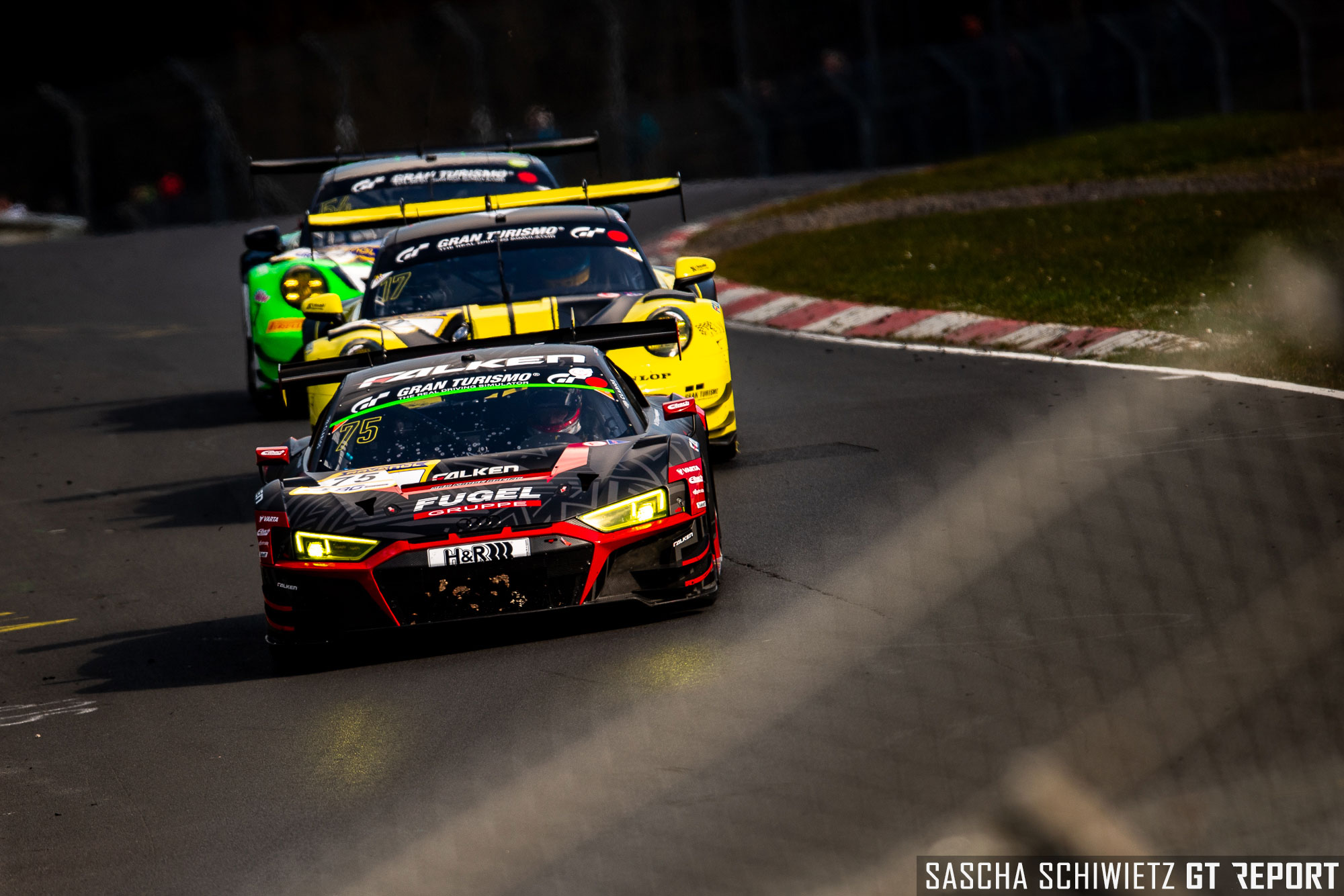
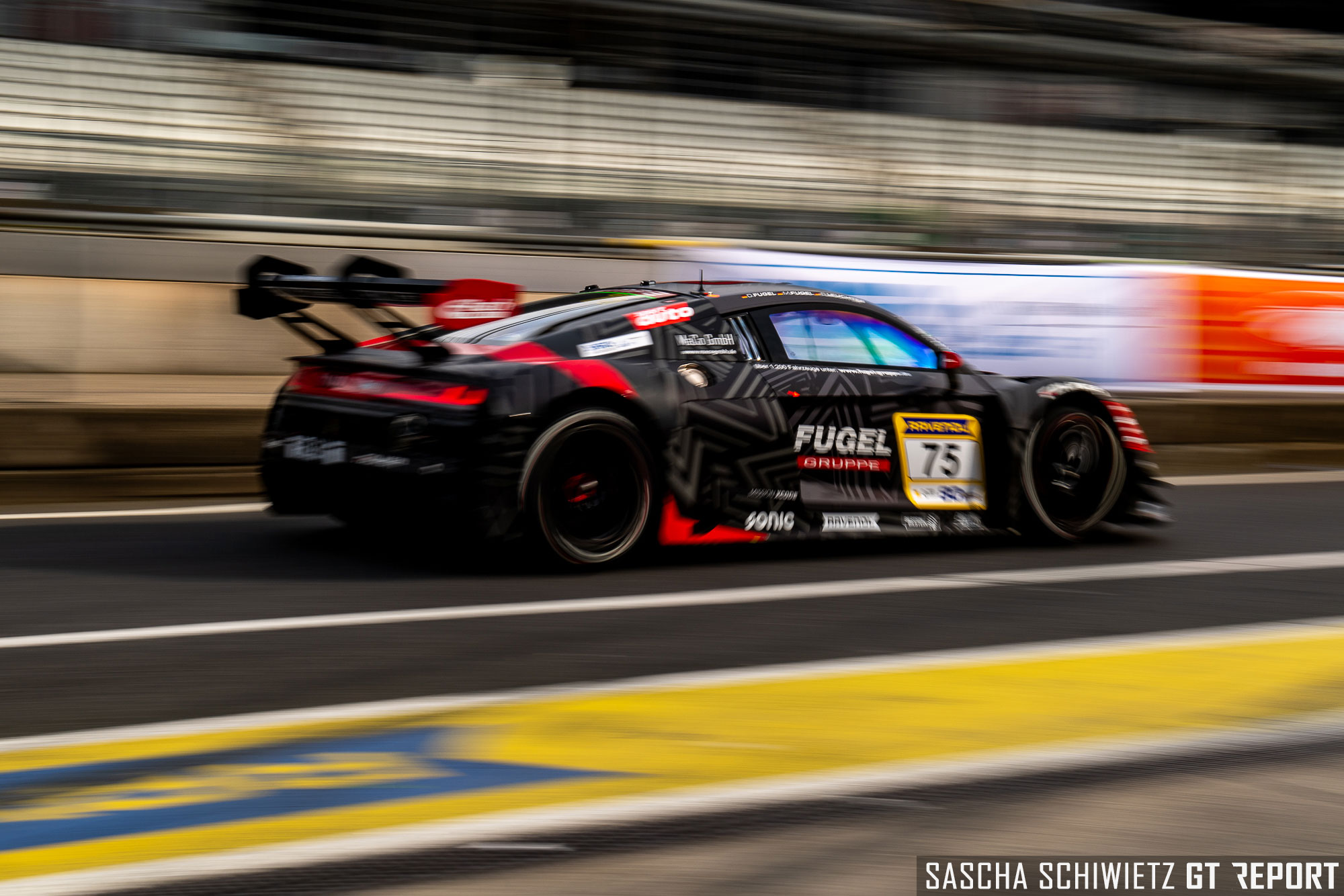
Leuchter will share the #75 with Dominik and Marcel Fugel. Finn Zulauf joins Christian Kohlhaas and Christoph Lenz in the #11, while Tom Coronel and Jan Jaap van Roon will race the #19.
Finn Zulauf, who is leading the ADAC GT Masters championship, joins the line-up.
“He appears to be very talented.
“I have not yet seen him driving one of our cars, but I have seen his results and some of his lap times.”
“He is fast, and I am confident he will also be fast in our car,” Leuchter adds.
The #75 Audi, meanwhile, has already demonstrated promising pace with Leuchter and the Fugel brothers.
“We also have the Fugel Group car, which I share with the two Fugel brothers,” he says. “The speed is already there. We just need a little bit of race luck, and then I think that car can also finish on the NLS podium.”
From the Golf to the Audi

Leuchter’s own career remains closely associated with front-wheel-drive touring cars, particularly the Volkswagen Golf. His work with Volkswagen has included racing, testing and development on the Nordschleife.
Moving between the Golf and Audi during the Nürburgring 24 Hours underlined how different the two sides of Max Kruse Racing’s programme have become.
“I had the opportunity to drive both cars in the 24-hour race this year,” he says. “I raced the Golf as well as the GT3, and I can tell you that the difference between them is huge.
“Both cars are fast. The Golf is also a very quick car, but there is a major difference between a mid-engined V10 GT3 and a front-engined, front-wheel-drive touring car with very little aerodynamics, less powerful brakes and smaller tyres.
“Switching between the two was a serious challenge. Luckily, I was the fastest driver in both cars.”
Asked which one he prefers, Leuchter initially returns to the car with which he has built much of his career.
“The Golf. I love the Golf!
“No, honestly, I cannot choose between them. I love both cars, but the Audi is so nice to drive.
“I also had the opportunity to drive the Porsche for Falken, but the Audi feels like such a pure racing car. It is a fantastic car. Honestly, it is lovely to drive around the Nordschleife.”
From an experiment to a contender

For all the emphasis placed on developing the fuel, Leuchter does not want Max Kruse Racing’s Audis to be viewed as solely experimental entries.
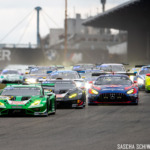
The #75 R8 reached Top Qualifying 2 during the team’s first Nürburgring 24 Hours with GT3 machinery. Its race ended in an accident, but it had already shown that an alternative-fuel car could compete among the established GT3 teams without an obvious performance deficit.
“This year was our first 24-hour race with the GT3,” Leuchter says. “We reached Top Qualifying 2, finished 11th overall in that session and started the race from 15th on the grid.
“It was a very positive experience, and I think we showed what we are capable of. Unfortunately, the car crashed during the race.
“In terms of pace, we were not quite at the very top, that is for sure, but we were in the mix. We were competitive, and that gives me a lot of confidence for the future.”
Leuchter now wants the programme to progress from proving its competitiveness to fighting for outright results.
“I would love to enter more GT3 cars here,” he says. “It would be very nice to see the team continue to grow.
“Of course, we also want to fight for victories and compete at the front, not only in NLS but also in the Nürburgring 24 Hours.”
That competitive ambition is essential to his wider argument. Alternative fuel cannot remain a side project praised only for reaching the finish. It must race against conventional fuel, withstand the same demands and eventually win on merit.
“Whether it is as a driver or as a team owner, winning is everything to me,” Leuchter says. “We are here to win.”